And you will call his name Jesus. For he will save his people from their sins. Matthew 1:21
This was one of the last promises made to someone about the coming Messiah. The Jews had been waiting for 1,500 years for their savior to be revealed. And after all that time, Jesus arrives and it’s another 30 years before anyone has any real idea that it’s him! Waiting was eminently characteristic of the Jewish experience. Upon further reflection, waiting is inherent to our humanity. We’re always waiting for something. I think that’s one of the subtle reasons why Christmas is so easy for people to get excited about. Christmas means no more waiting and the fulfillment of promises. The promise of gifts for the kids. The promise of time off work and school. The promise of seeing family from out of state. The promise of snow (or bigger surf). Its that one time a year we get a bunch of fulfillment all wrapped up together in a few days of fun and celebration.
The rest of life is so much more about waiting. After 2017 brought positive developments to the political landscape and our programs in Ethiopia, a number of unexpected events cast a storm of doubt on a hopeful 2018. When the Prime Minister resigned in February, a calm that had followed several years of turmoil was disrupted. While in May the first Oromo prime minister was elected and many longed-for changes began to unfold, the ongoing uncertainty has held Discovering Light to a slow growth season. Yet, we are still brimming with expectation of light and life dawning on Southeast Ethiopia, releasing families and whole villages from their captivity to harmful beliefs and traditions. As sure as the promise of Jesus’ arrival, we believe the Arsi Oromo are destined to experience their potential as a people made in God’s image.
A new era of working and waiting has begun for our family as Marni entered her junior year and suddenly we’re staring down the prospect of our little girl venturing out on her own. We are so proud of her work ethic and desire to use her gifts and talents to do great things. Abe is our slick 8th grader now but high school is right around the corner. We are just beginning to envision where his knack for facts and love for athletics will take him. Wherever we’re going, Dane will always keep us in the moment. We thank God for his incredibly smooth transition into middle school and a gaggle of new friends. (Gaggle: a disorderly group of people. Doesn’t that describe 6th graders to a T!) Roman’s command of teen slang and style and his athletic feats remind us he isn’t our baby anymore – except when he wants to cuddle or be tucked in at night!
Sara and I continue to pursue God’s design for our family, exploring how to be the best mate we can be for one another, the most loving parents we can be for our kids, and the unique ways we can be a blessing in our community. We are always watching and waiting for opportunities to serve and love. These moments bring us our greatest joy.
May you enjoy a fulfilling holiday season, and a joyous 2019.
The afternoon of Friday, July 6 was one of those “I’ll always remember where I was” moments. I can think of one exception but I’m not sure if any of those are ever good memories. Because it’s usually an unexpected tragedy. On that day, my dad called to tell me that Lora Smith, the wife of one of my oldest friends Ryan, had died and that he and their and four-year old son, Caleb, were missing. As many of you know, we found out in the next few days that not only had all three passed away, but they had been killed in a manner that seemed to only happen in the movies or in the news to people we don’t know. Digesting this news was extremely difficult. I had known Ryan for 30 years, growing up with him and his twin brother Chad at New Hope Church. Their parents, Byron and Lin, are close family friends who have served at New Hope in various capacities and been helpful guides over the past 8 years since we began working in Ethiopia.
When we were young, Ryan, Chad and I spent hours at the beach, and many nights hanging out with a large group of close friends from our high school. Ironically, it was our time away at college that drew both of us into a real relationship with God. As we both began to follow Christ intently, we found ourselves sharing a similar passion for God’s purpose around the world that would be the primary topic of discussion when we saw each other every few months. We both went on to pursue God’s direction in our lives with our families and would catch up a bit when Ryan was in San Diego. We’ve had friends follow God to some dangerous places, where life was at risk because of religious persecution or political instability. Ryan and Lora lived a challenging life but in a relatively modern, pro-Western and pluralistic country. So when Ryan and I spent a few hours together last February, it didn’t occur in the least that this would be our final earthly conversation. We had lunch and walked around a local mall comparing recent challenges and victories of working among aspiring, yet poor communities outside of the U.S. It was the longest time we’d spent together and the most in depth conversation we’d had in years. We left planning to surf later that week but couldn’t line our schedules up before he departed San Diego. We’d have to try again when he was back in town. Now, I know it was goodbye.
Fishing Mammoth streams with Papa Joe. A dream come true.
The news of the Smith deaths is still shocking. Their family has shown uncommon grace throughout the ordeal but one can only imagine their suffocating pain and wonder how a mother, father, sister, or brother goes on. The week following the news of their death, Dane, Roman, and I headed out on a long-awaited fishing excursion to Mammoth with my dad. Dane had dreamed of this trip for years and begged Papa Joe to bring him to the ‘promised land’. We had three fantastic days traversing the streams that flow in and out of the majestic lakes of the Eastern Sierras. Dane took no moment for granted and was always the last one to cast as we wrapped up our morning or evening fishing session. For him, it was a taste of heaven.
Many a young angler has cut their teeth on the shores of man-made lakes and collections of rain water runoff around San Diego County. But those are a paltry comparison to what is on offer in the waters of California’s renowned mountain range. So it was a father’s delight to see my son in his element, especially when the distance to this kind of fishing makes the opportunities rare. Yet as we walked the banks of Lee Vining creek early in the morning, I was struck with the juxtaposition of such sadness at home and the unbridled joy my boys were experiencing as they wrestled brown trout out of the sparkling waters.
Life’s jubilations and anguish filled my mind over the coming weeks as our kids enjoyed summer (mostly because mama Sara planned tons of fun activities for them) and our family anticipated another visit to the Sierra’s, in Bass Lake. These contrasts continued as we spent a week on the lake under the haze of smoke from the Ferguson Fire that shut down Yosemite National Park and burned nearly 97,000 acres. Joy and sorrow, beauty and destruction, life and death.
Smokey Ferguson Fire sunset on Bass Lake.
Over the last 10 years, I’ve been on a journey of renewal in understanding what God wants for people in this life. It’s an experience many others have shared as there are numerous books, conferences, and media connecting the Bible’s teaching to everyday life, relationships, politics, economics, community development and more. The most important teaching on this for me has come from Darrow Miller and his Discipling Nations: The Power of Truth to Transform Cultures. The book gives the clearest and most thorough explanation of God’s plan for humanity; from the individual all the way to the nations of the world. While much of this teaching has emphasized life on this earth, most, if not all, have made an effort to affirm the Biblical understanding of eternity and connect what God has planned for the present age, with the age to come.
The journey has been exciting as things like creation, vocation, and community now have fuller meaning and definition. Our work in Ethiopia has been shaped by these truths as we seek to understand how Jesus’ Good News addresses generational poverty and injustice, and leads to flourishing communities. The hope of eternal life and the sting of death removed by Jesus’ resurrection has been brought into balance with Jesus promise of abundant life here and now. (John 10:10)
Summers like this one though, bring eternity into focus. Because if the Bible is true, then no matter how much righteous abundance is experienced in this life, it is only a taste of what is to come in the next. The 40 some years the Smiths had, or the 65, or even 95 years of others is like a one grain of sand out of all the grains on all the beaches of the world compared with the eternal life that awaits. And in that life, we are promised the following:
“God’s dwelling place is now among the people, and he will dwell with them. They will be his people, and God himself will be with them and be their God.‘He will wipe every tear from their eyes. There will be no more death or mourning or crying or pain, for the old order of things has passed away.” (Revelation 21:3,4)
The grief of losing dear friends so unexpectedly, so early, and so heinously is softened by the amazing life they lived (I could write pages and pages, as many have, of the profound impact the Smiths had on others), but even more by the hope of a heaven they now are enjoying. The heavenly description above goes on to detail brilliant colors and endless beauty and satisfaction – a glorious promise for those who believe. The sacrifices they made and that we are all called to make as Jesus disciples would be in vain otherwise. “Let us eat, drink, for tomorrow we die.” (1 Corinthians 15:32)
All these musings about heaven actually began with my trip to Ethiopia in late June, before the Smiths’ tragedy and all the summer excitement. Ethiopia has undergone such dramatic change and I am constantly wondering whether our efforts to cultivate healthy families spiritually, socially, and economically will survive the whirlwind industrialization that is taking place. The new prime minister, Abiy Ahmed has valiantly begun to implement reforms that will hopefully bring opportunity and justice to the entire nation, not just a favored few. But the week before I left, an assassination attempt was made on Mr. Abiy during a large public rally in Addis Ababa. Opposing political forces are accused of instigating the attack.
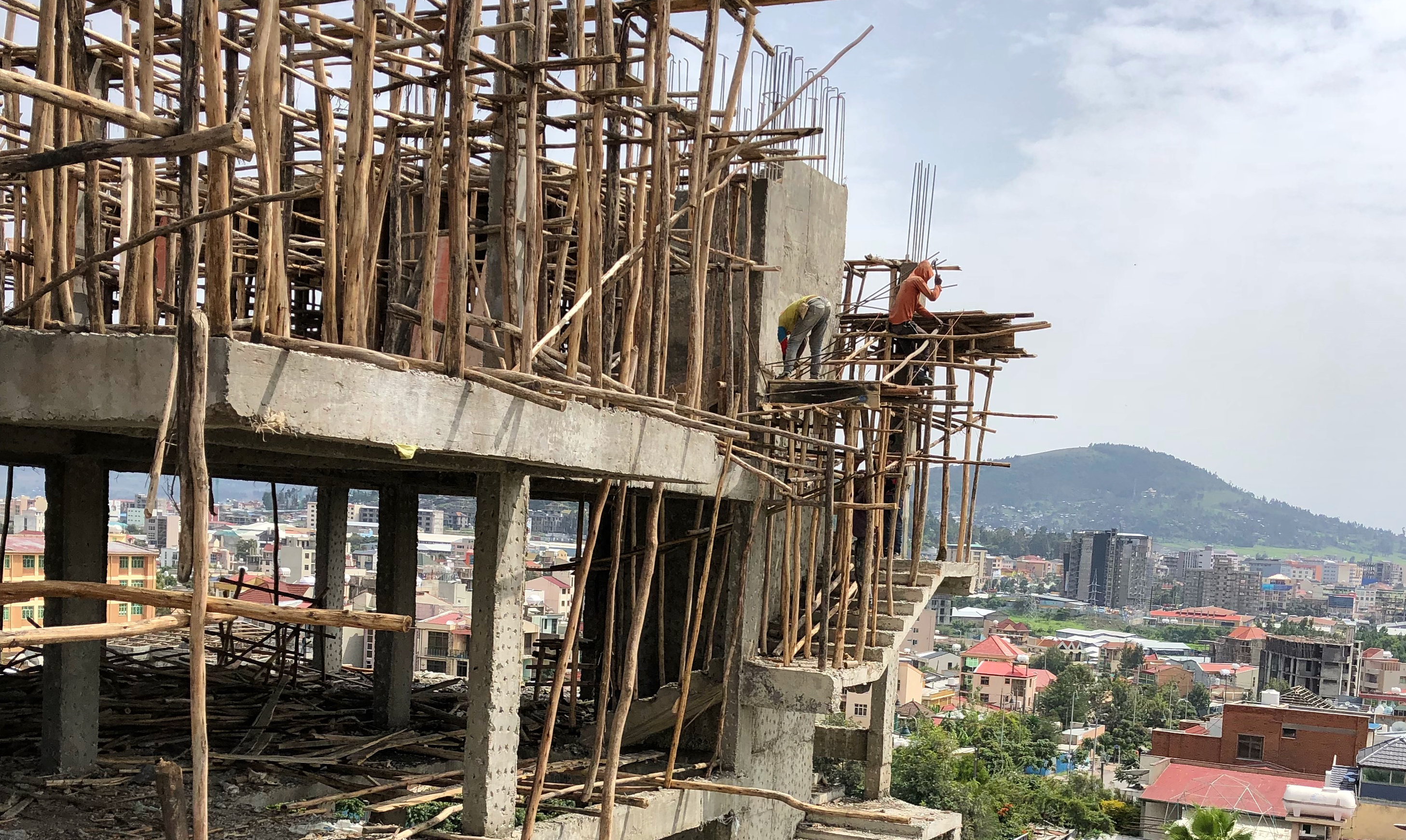
The view out of many windows in Addis Ababa. Every square inch is put to use.
Fortunately it seems this threat has been mitigated and the government continues its march towards a more free and democratic society. Even still, the fragility of the political situation reminded me that heaven matters because there is no perfect government here on earth. We have seen hundreds of families move towards wholeness through the vehicle of savings groups and our other programs. I was excited to discuss with our partners the prospect of expanding the savings group program to a new set of districts in 2019, starting 200 more groups in three new districts. And my hope rose even higher as I learned of hundreds of simple churches multiplying across the region. I rejoiced with our partners over the families that are getting right with God in Arsi Oromo villages because heaven awaits no matter the direction of Ethiopia’s future.
The kids started school last Wednesday, Sara a week before that, and the transition is over. Our summer adventures came and went so quickly. The joys were so great but so fleeting. The loss of friends made sadness the backdrop of our summer adventures. In the few moments of quiet reflection, the highest of highs and lowest of lows inspired a longing for heaven.
In the summer of 2014, I began going to Ethiopia by myself for the first time. Following a visit in April 2013 with a long-time donor that included a number of meetings with partners in ‘dimly lit rooms’, our leadership team decided it was best to make sure those visits trips were spent mostly, if not exclusively, experiencing the programs in the field. Business meetings were better off scheduled separately and I didn’t necessarily need to visit a savings group or tour Selam Awassa vocational school. I enjoyed partner meetings and it made sense that me going alone would be a more efficient use of time in Ethiopia.
The last time we tried to mix a vision trip with business meetings in Ethiopia.
After my second solo mission, an odd thing began to happen. Initially, it was right before I left and then a few weeks out, and then, as soon as I booked my tickets and just about anytime the trip came to mind. Anxiety at the thought of going would overcome me resulting in a mild stomach ache, jitters, and a general sense of worry. Typically once I left the ground on my first leg – either San Diego to LAX or DC – I would settle in and the nerves would dissipate. But the anxiety was real and impacting even though I couldn’t really ever put my finger on what I was anxious about. Was there something about leaving my family for a week or the work I was headed to do that stirred up these feelings? I know others who deal with anxiety regularly and my experience is somewhat different to theirs. Their struggle is much more challenging. My anxiety is mild and goes away and the most extreme response is typically a short-lived desire for some other job. Nevertheless, after several years, I wanted to understand the root cause of this discomfort and began asking God for some insight prior to my last couple travels to Ethiopia.
I was confident my anxiety was not related to the work in Ethiopia or the travel. I enjoy the journey and am at home when I’m with our partners. I’ve long loved the planning, the back and forth dialogue, and the game of understanding cross cultural communication. Ethiopia is also safe and I’ve never worried about flying, driving on funky roads, having poor internet or limited communication. Not to mention, with iMessage and the usually serviceable internet I am able to stay rather connected to whatever important events are going on at home.
My suspicion was the unsettled feelings were more related to what I was leaving behind. But why would I worry about my family and home life while I was gone for a week. Working moms and dads do that kind of thing all the time. Sara is perfectly fine on her own – it sounds silly to even have to say. And we almost always have lots of help from both sets of grandparents. As I sought the Lord over the last few years, an answer began to crystallize between my last trips in June 2017 and January of this year. What I left wasn’t family, safety, but rather control and an environment where my identify, satisfaction, and peace was in the comfort of our routine. With four school age kids and two working parents, having a modicum of order is good and necessary for everyone. And the Rhodes are not intensely organized or rigid. It’s not in Sara’s or my nature to be. We often manage our life and schedule week to week as its the only way we can keep our sanity and keep up. But my nervousness about a trip to Ethiopia two weeks out of the year exposed how feeling in control, controls me in ways I wasn’t even aware.
What would I have to worry about while I was gone?
God let me peek into my heart to see where his love isn’t controlling me. I was controlling me.
As I recognized this about myself, I knew it wasn’t simply a behavior to fix or a wrong I need to right. Each time I encountered this anxiety and I didn’t know why, I was compelled to ask God for help, turn my attention to him and recognize my simple need for him to be in control. That was the point. I was going to do explicitly Christian work in Ethiopia. We are a family that acknowledges our dependence on God as a part of the normal rhythm of life. Our conversations, prayers, priorities all point toward God as the center, the sun around which our lives orbit. That life can become a routine, a great routine actually, and one God wants us to have. But the small discomfort of a mild anxiety I can’t entirely control arrests me from depending on a routine, and drives me to make sure my heart is still relying on God and not the familiarity and comfort of a lifestyle.
So there I was a about two weeks ago sending my travel agent a message asking for itineraries and prices and sure as the sun rises, the anxiety returned. As usual, I go through the normal steps of reminding myself of the truth about God’s love and my security in him, but those realities don’t have the power in themselves to send the emotions away. I trust and wait and plan my trip regardless. It’s a reminder that no matter how much control I have, I am still subject to the One who spoke and commanded the world into being. He wants me to know and enjoy him and the nagging discomfort I will feel in the coming weeks will point me towards him.
Bon Voyage…
I head to Ethiopia on June 24th for a week. Important meetings await. I will evaluate our small business program to determine whether the structure is best suited to withstand the challenges presented by recent political turmoil and inexperience of the loan beneficiaries. I’m looking forward to meeting some of the key nationals who have risen from among the savings group ranks to become leaders of the movement. I will meet with our Simple Church partners to ensure coaches and mentors are effectively evaluating the health of church starts. I will personally congratulate our two students, Birhanu and Adane who will graduate from Selam Awassa Technical and Vocational College in July before heading out into the workforce.
I will go confidently and sure of good outcomes in my meetings and I always enjoy spending time with the partners who have become my friends. I am sure my family will do fine without me – the kids usually tell me how nice it was for me to be gone for a week. And I am sure that the jitters and shortness of breath will come and go in the next few weeks reaching their peak while I’m packing the day I leave. And I remind myself, “Blessed in the one who trusts in the Lord, whose trust is in the Lord.” (Jeremiah 17:7)
A few notes about our family, your prayers are certainly appreciated. We are approaching summer which means lots of fun for the kids and Sara away from school. This year it also means another big transition. Sara will be resting from her first year back as a totally full-time teacher. Marni will be preparing for her junior year of high school which means we are starting to seriously talk about college but even more significant is she will start driving sometime in July! We are eager to have a third chauffeur in the family but don’t quite know how we will feel watching her drive off by herself the first time. Dane finishes fifth grade and will soon be a middle schooler with his Abe. Which means Rome will be all by himself at elementary school for the first time, something that will feel very weird and lonely at first.
Transitions seem to always take casualties in our family. Change affects us all differently and impacts our ability to manage 6 people’s needs and desires. If you have a moment or our family comes to mind, would you pray for us to fully experience these milestones in all their joy, gratitude, fear, and sadness. Ask God to give us a keen awareness of how these great events are also experienced as disruptions and discomfort for some. May we turn to God, in whom we trust, through all the excitement that awaits.
For as long as I can remember, people have made a point to refer to me as a ‘Pastor’s Kid’. And nearly every time someone said, “Oh, you’re a ‘PK’”, I was caught off guard by the label. Other ‘PK’ who found out my dad was a pastor would often say, ‘You’re a ‘PK’ like me!” implying there was a shared experience that linked us all. While I recognized this statement was true, I felt most meant something by it that I didn’t identify with.
There is a common conception that being a pastor’s kid has a set of inherent pressures and a whole list of pathologies are attributed to being a ‘PK’. Rebellion and resentment manifesting themselves in issues with authority, drug use, unhealthy relationships, and the like.
I’ve found myself reflecting on these things as my days as a Pastor’s Kid were coming to a close. On March 18, my dad officially ‘retired’ from his position as Senior Pastor of New Hope Church of Rancho Peñasquitos. Sunday, March 4 was his last official sermon under that title.
Originally, he mentioned taking three or four months to do some debriefing and then getting on with whatever work he was going to be doing in the next chapter of his life, which didn’t seem short or long to me. The time frame made sense because I never really expected Joe Rhodes to retire. He often said he didn’t ever really believe in retiring. And truthfully, he would emphatically say he isn’t retiring. Rather, he’s in ‘transition’. Whatever he wants to call it, it’s strange. A few months back he asked what I thought about him taking a nine month ‘sabbatical’ instead of three or four months away. I thought this sounded fantastic! After 37 years, nine months was nothing. How much fun to really get away. But it also occurred to me that he’s really not going to be a pastor anymore. Joe Rhodes will always be pastoral. He will naturally share people’s burdens and care for people, formally and informally. But the nitty gritty, running a church, being on-call to serve a couple hundred people at any given time role is over.
Certain occupations carry an exceptional amount of responsibility and expectations in our culture. Pastors are assumed to be the standard bearer of morality in their community even though most would say they struggle and sin just like anyone else. Pastors are the ones people apologize to for cussing in public. The “oops, sorry pastor” after an errant F-bomb symbolizes the pedestal of righteousness pastors have been hoisted onto by virtue of their title. For years, my dad was on a rotating schedule of pastors that would pray at my high school’s graduation. Plenty of teachers or administrators could have given the blessing but in the eye’s of the community, my dad’s title made him uniquely qualified.
Joe and Tricia Rhodes in their pastoral prime.
This cultural characterization is probably what made people expect certain kinds of behavior from me as their son and assume I was a ticking time bomb of defiant behavior. Truthfully, I wasn’t the well-behaved yet sheltered and repressed PK simmering with resentment. The only thing my pastor dad and pastor’s wife mom seemed to shelter me from were those pressures and expectations. Their beliefs and values were very clear but they never seemed to fear me pushing the boundaries of what others thought was acceptable. This freedom carved out space for me to discover how their beliefs and values were the best ones available and choose them as my own. How I looked and spent my time – ear piercings, hair dye, Melrose Place, punk rock shows that sent me home smelling like a chain smoker – and many other decisions were left up to me. Their focus was on helping me understand people, why we make certain choices, and how to treat others well without expectations.
Of course, things like respecting authority, doing my best in school, and avoiding destructive behaviors were layered in. And staples of the Christian life like Bible reading and prayer were normative, although awkward family devotions were thankfully avoided. (How and why to do those is a discussion for another time.) But the freedom to be myself, to look goofy, to make a lot of my own lifestyle choices without the pressure to conform to an idea others had about what pastors and their families should look like, might just be the greatest gift Joe and Tricia Rhodes gave me as a ‘PK’.
I always felt my parents’ work life was the expression of a vibrant, authentic reality, rather than the source of some stale facade or a burdensome yoke I had to live under. They were intentional about making sure I knew following Jesus was a first a matter of the heart and mind. When I decided God could have all of me and was ready to let him shape my future willingly, I discovered what made my parents so content and was excited to share my experiences with them. I wasn’t looking for affirmation because I already had it.
“I think I was temporarily possessed by the Easter Bunny” – Jon Rhodes
As the days of their pastoral ministry come to an end, I thank God Joe and Tricia Rhodes loved Jesus and cared how their very public faith would impact me. I’m grateful not to identify with the expectations and resentments its seems so many have fought as pastor’s kids. Most of the stories I hear do have happy endings when the child sees the error of their rebellious ways, forgives the mistakes of their overbearing parents, and find their own way back to God. I’m happy to have avoided much of the hurt and sorrow those years carry with them. Not to mention, the foundation of friendship and trust I have with my dad paved the way for our partnership in ministry.
The weirdest of all the changes that are coming is the next nine months without my dad’s involvement in Discovering Light. His ‘transition team’ has issued strict orders to keep his distance from New Hope Church and even our separate work in Ethiopia. For starters, they want him to enjoy a time away from ministry that others have learned can only happen when one is completely detached. Second, he will have the space to discern new callings, and renew old ones. We are excited for the upcoming season of unknowns. I joked the other day that my dad will come back and get to be a Grandpa-Pastor, loving the people at New Hope and staying involved without having to bring any of our junk home with him. Professional hand-shaker and baby-holder. And while he’s ‘gone’ for a time, I fully expect mysterious inquiries from someone with a name like Rho Jodes, requesting detailed news from Southeast Ethiopia.
Regarding Ethiopia, more trying times have come this nation we love so much. Opposing ethnic groups are battling for control of the country’s future, including the Arsi Oromo, part of the broader Oromo tribe. The Oromo are seeking more representation in the federal government and more influence in the stewardship of Ethiopia’s resources. In late February, a state of emergency was declared by the government for the second time in 18 months. Travel and communication is restricted with the intention to protect the country from potentially violent uprising. The Oromo, and other marginalized tribes feel their voice is being suppressed even more by the state of emergency. The Prime Minister recently resigned and the nation is in limbo. Discovering Light’s partners continue to carry out their mission while adapting to the current conditions. During the last state of emergency the thresher businesses were sidelined for one of the two yearly harvest seasons. We are awaiting word on their status this time around. Churches and Discovery Bible Studies continue to grow as they are inherently resilient to external challenges. The impact on the savings groups is also yet to be seen. We have a strong sense of God’s purpose in the relationships we have established in Ethiopia during the last eight years. Our prayer is for the nation to be spared from bloodshed and for the shaking and shifting to contribute to Ethiopia’s renewal.
Much more work is to be done in the horn of Africa to that end. I am confident and thankful that former pastor Joe Rhodes will be involved.
Try this thought experiment. Imagine a collection of psychologists, brain function experts, interior designers, organization experts, and zen masters proposed the following: Take everything out of your house except for the absolute essentials. Keep clothes to last you a few weeks, toiletries, and technological devices (especially CHARGERS, don’t forget chargers!!!). Get rid of anything you think doesn’t need to make its way back into your house like the lost sock collection and the faded, smelly couch that no one sits on anymore. Fill your garage from floor to ceiling with whatever you might keep. Next, have an interior designer bring their own furniture, lighting and accents in your house and show you what it should look like. Live in the house for a few weeks so you get used to the ‘feel’ of a new layout. Then, after the designers move their stuff out, move yours back in. Piece by piece, bring your furniture, clothes, lamps, books, and more back into your house, evaluating what should stay and what can go for good. Redesign your home from scratch. Use what you have or buy new items if necessary. Give yourself a new home without moving. Sounds easy enough, right?
Its late-September 2017, Sara and I have unintentionally begun the process described above, although it wasn’t an expert’s recommendation.
In late August, Sara came across a home nearby to ours that had been for sale for some time and the price was getting closer and closer to something we could afford. With the ‘wild’ housing market in San Diego right now, we saw an opening to sell our home and purchase another with a yard that could contain the soccer balls, baseballs, arrows, screwdrivers (yes, screwdrivers), and noise that our current yard could not. Our three wonderful, but not so mild-mannered boys had spent the summer outgrowing our back yard and we thought this might be the perfect opportunity. We put a low “it’s gonna take a miracle” bid on the house and after a week and a half, the sellers miraculously chose us despite having higher offers! We didn’t have time to be stunned, our house had to be on the market in three days. We worked tirelessly getting the house prepared with an incredible amount of help from the grandparents. To give us the best chance to sell quickly, our agent planned to have our house ‘staged’ the day before we listed. This unfamiliar process is where the mass removal of stuff from our home comes in. Professional designers came with a crew and moved all our stuff into the garage and filled the home with brand new furniture that fit our space perfectly. Seeing our house like this was a twilight zone experience. The decor and furniture was beautiful, matching our coastal paint colors and style.
It all happened so fast…On the day we listed our house (a Friday), the sellers on our desired home unexpectedly exercised a clause that gave us 72 hours to have a buyer. Apparently, they found their next home, and couldn’t wait for us. They had to go back to another buyer with less contingencies and a higher offer. A process that seemed to have us flying on angel’s wings came to a screeching halt and we were left to imagine how the ultimate miracle of selling our home was going to happen. We had open houses on Saturday and Sunday, and an extra day added to the 72 hours because of the Labor Day holiday. But by Tuesday night, we had no real offers and a realization that God must have different plans. We kept our house on the market for a few more days but began planning what we were going to do once the stagers removed all their items and much of our house was left empty.
There was a mild sadness in our family. We had all bought into the move. The kids had masterfully handled the stress of realtor appointments, shuffling the house around, and living on borrowed furniture that was much nicer than ours. Fortunately, we loved our house and were quite comfortable staying put despite the daunting task of unpacking our garage and putting the pieces back in our home. Interestingly, the last 5 years are the longest we’d stayed in one home since we were married 17 years ago. And all of us had been there the whole time, plus a few extras, so we had lots of stuff. Over the few weeks of having our garage packed, I was struck by how few of our things were actually used on a day to day basis. As much as we’d like to have a garage instead of a storage unit, we’re in no rush to drag everything back in.
Despite watching thousands of lives turned upside down because of hurricanes in Texas and Florida and counting our blessings, we are still contemplating the significance of the move that wasn’t to be. The lesson could be just thank God we have a home. We’ve experienced a cleansing of sorts, a decluttering of the highest magnitude. What was God doing? This is a question we often ask in the face of suffering. But our situation was more weird than it was painful. It had the makings of a miracle. The night before our deadline to have a buyer, we even had a Korean immigrant couple show up without an appointment wanting to have look at our home and not wanting the trouble of using an agent. They talked about getting a deal done quickly so their kids could settle into their new schools. They said they a loan approval up to one million dollars so the price wasn’t an obstacle. Our kids watched them walk through the house and after they left we sat wondering, did God really just do that – deliver a buyer right to our door in a way that only credit could go to him? Alas, he did not.
So, what was this upheaval about? We are still wondering. Ironically, we got a call this week notifying us the buyers on the other property backed out and the house was for sale once again. Sara and I had a chuckle about how we knew something like this would happen. But truthfully, we aren’t highly motivated to jump right back into the process. A closer look at our finances reveals we might have needed more of miracle to survive in the new home than we did to make the purchase. Practically, we couldn’t imagine taking the time to put all our junk in the garage, in order to thoroughly assess what we want our home to look like. But it has been an enlightening process.
A few months back, I wrote about the ‘belief’ we encourage in our kids and hope for our young friends in Ethiopia. That experience is sometimes called common grace, available to every person on the planet who searches out the possibilities of the created world. But there is another grace that comes from seeking after the Creator himself. During the three weeks we managed our hectic life and added home selling and buying tasks, we experienced a heightened awareness of God’s work in our lives. Our thoughts consistently turned to him as each layer of the story unfolded. And he was near to us, especially in the waiting. The crazy pace of life was unsustainable. We could have left our house on the market and the staged furniture in place for a few more weeks to see what might happen. We could have sold our house and looked for another opportunity. But in seeking the Lord, we knew the process had come to an end. The reasons why are a a mystery and maybe will remain so. But God was doing something. He was keeping us close to him, in a unique way, for a short period of time that only intense situations can bring. The relationship God fosters with us through Jesus, brings contentment over our circumstances, especially in these times.
We long for our friends here at home and abroad to have this same relationship. The glory of wonder and imagination and discovery when we use our gifts and passions is most fulfilling when God is allowed to be intimately involved. When we open our hearts, he’ll do things like make houses available and unavailable just to get us closer to him. There is so much more that can be said – but God wanting to be near us, as a father, as a friend – is why we want more than just family well-being, good jobs, and better infrastructure for the Arsi Oromo. We desire fullness, abundance in all of life.
For in him all the fullness of God was pleased to dwell, and through him to reconcile to himself all things, whether on earth or in heaven, making peace by the blood of his cross. Colossians 1:19,20
A visit to Ethiopia came days after school got out in June and was followed by a special trip to Chicago and Michigan to visit Sara’s extended family. Meeting a group of young people in Ethiopia and having lots of time with our kids the last month has reminded me how similar their development is despite the vast differences in material wealth and daily life. My previous 5 or 6 trips to Ethiopia had very little to no field visits. Instead, my time was spent meeting with partners evaluating proposals and field reports and the arduous process of cross-cultural communication. I love that part of my job. One of the ways I know this is my calling: other people tell me how much they dislike those kinds of meetings. During this time, I’ve relied on written reports and anecdotes from other visitors for evidence of success in our programs. Thankfully, the past 18 months have been filled with good news even as there have been consistent challenges to the goals we set with our Ethiopian partners.
Back in the countryside where hope is alive!
Last month I spent a week with a small team visiting West Arsi to learn more about our work and capture stories of impact in a series of videos we will be sharing through the Discovering Light website. I had business to take care of (meetings in dimly lit rooms) in addition to the field visits but this was the best week to go in the summer months and so found a way to fit it all in. I’m so glad I did. Spending time in the villages with families that are experiencing new ways to live and thrive was incredibly refreshing for my own soul. First, as we shared in a Discovering Light newsletter last month, we spent time with a couple of savings groups including one comprised of boys and young men, ages 10 to 16. The boys who shared with us their stories of buying and breeding livestock with their savings opened my eyes to our program’s potential role in a significant generational change. Young people in Ethiopia are being educated in greater numbers than ever before through a government effort to increase the primary schools throughout the country. Wireless technology is making its way into the countryside at a rapid pace. Everyone’s got a cell phone. And while every generation boasts advances over those that came before, what is currently taking place in Ethiopia may be the most dramatic shift in centuries. It’s not hard to imagine the material benefits of greater knowledge and technological progress. But there was something profound listening to a 10-year-old boy tell us about his group. He had something that was possibly greater: Belief…belief in the world, in himself, and in others.
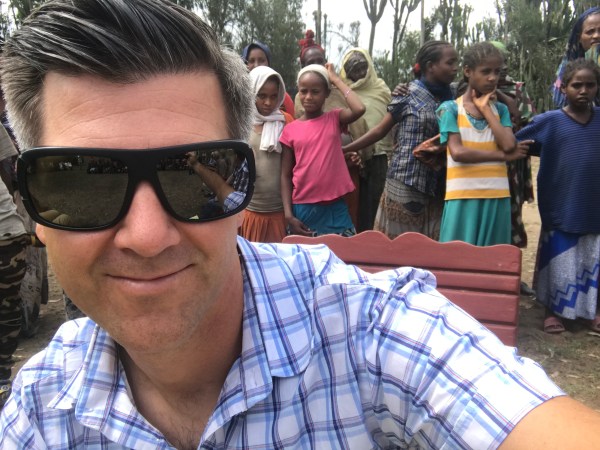
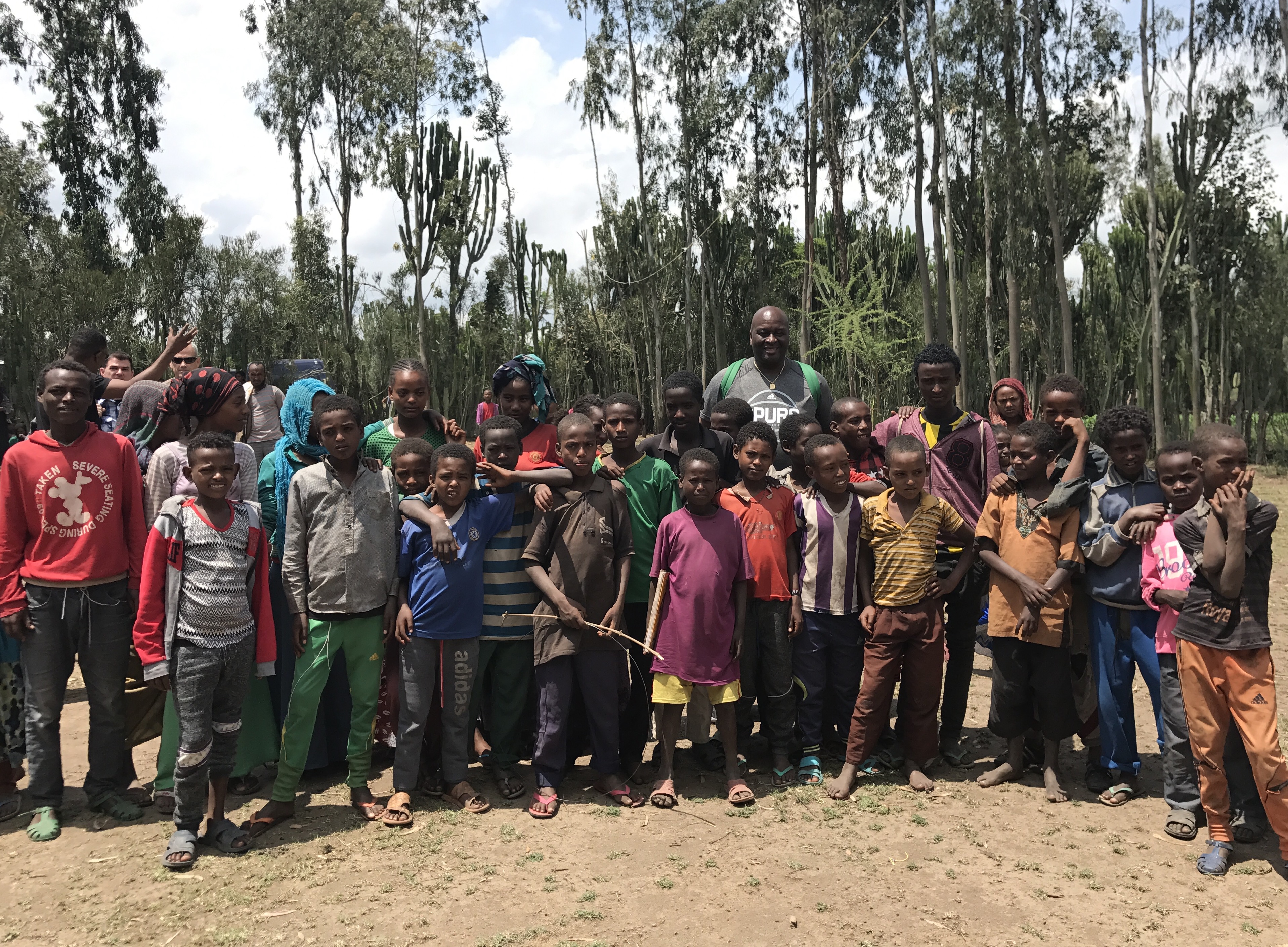
The saving kids of Faji village with DL team member Richard Smith.
Any first time visitor will note the warm-hearted smiles of Ethiopian children. A seemingly genuine joy seems to emanate from their being seems and only becomes contradictory when an all too common request for money is directed towards foreigners. “You, you, you….money, money, money!” rings out like refrain as ‘firenges’ (foreigners) make their way past youngsters. This begging from elicits a sadness, a feeling these ‘happy’ children have given up hope in their own God-given potential so early in life.
Hence why I felt despite the boy’s small stature, but his spirit was giant. His presence rejuvenated my confidence in the value of the savings groups program. I felt like I had climbed a vista, only to see higher peaks unseen from a lower vantage point. I find myself imagining how the rapid transformation of Ethiopian life would be enhanced by raising a generation that was heartened by the gains and successes of their neighbors; and saw unlimited, rather than fixed resources in their surroundings.
In the days following, I began to wonder how this revelation should affect our purpose, ‘the end-game’ of working in Ethiopia. We’ve committed to helping the Arsi Oromo, a specific tribe of Ethiopians, embrace the abundant life God designed for all people to experience. We’ve never attempted to paint an exact picture of how this will look. But those boys were surely an example of ‘you know it when you see it’ transformation. We are inspired by this unexpected and unplanned, yet authentic example of fruitful labor by our partners.
Marni and the winning photo.
Having four children and two boys who could be members of this savings group had they been born in Faji village makes this experience even richer. Their imaginations are expansive. Sara and I are hesitant to discourage any of them at this time in their development and eager to help them turn dreams into reality. Giving them opportunities to create and build and cultivate relationships allows them to live before the presence of God where he can guide and affirm. Marni is headed into her sophomore year of high school. We delight in her work ethic and insistence on making straight A’s so that she can have a broad choice of universities to attend. But something magical happened when Sara’s cousin found out Marni was taking a photo class and gave her an expensive, high-capacity camera he no longer needed. When Sara took Marni and a friend to the beach to take pictures of the sunset last winter, none of us expected we would then be invited to the Del Mar Fair in June to celebrate Marni’s San Diego County Lifestyles Photography, “Best in Show” award for a shot she took of her friends feet in the sand. We were thrilled, of course, and happy for the affirmation of Marni’s creativity and gifting.
Abe is still imagining himself as a professional soccer player yet playing in college sounds pretty cool too. His young mind was opened to a world of possibility on a recent trip to San Jose where he spent time with some world-class soccer coaches only to say his favorite experience was a brief visit to Stanford.
Abe dreaming big.
And just a few days ago, in need of some summertime distraction, Sara turned 10-year-old Dane loose on an old printer and watched him take the contraption apart piece by piece and discovering a ‘fidget spinner’ embedded in the machine’s inner working. Each piece he deconstructed was fuel for the engine of his imagination. Copper wire and metal rings still lie around the house as remnants of his exploration.
King Solomon said it was the “glory of kings to search things out” which is only true if there is something to discover. This process of discovery resulted in the ‘belief’ I saw in my young friend in the savings group in Faji Village and why these groups and other initiatives like them deserve to be considered right along the new highways, schools, and cell towers changing the landscape of rural Ethiopia. The real benefit of these advances will be achieved when young Ethiopians see the unlimited possibilities represented in the asphalt roads, school books, and mobile communication. For our own kids, access to elite universities, expensive cameras, and old devices are pathways to keep our kids truly alive. They are tools we can use to show them there is more to the world than what they see right before their eyes.
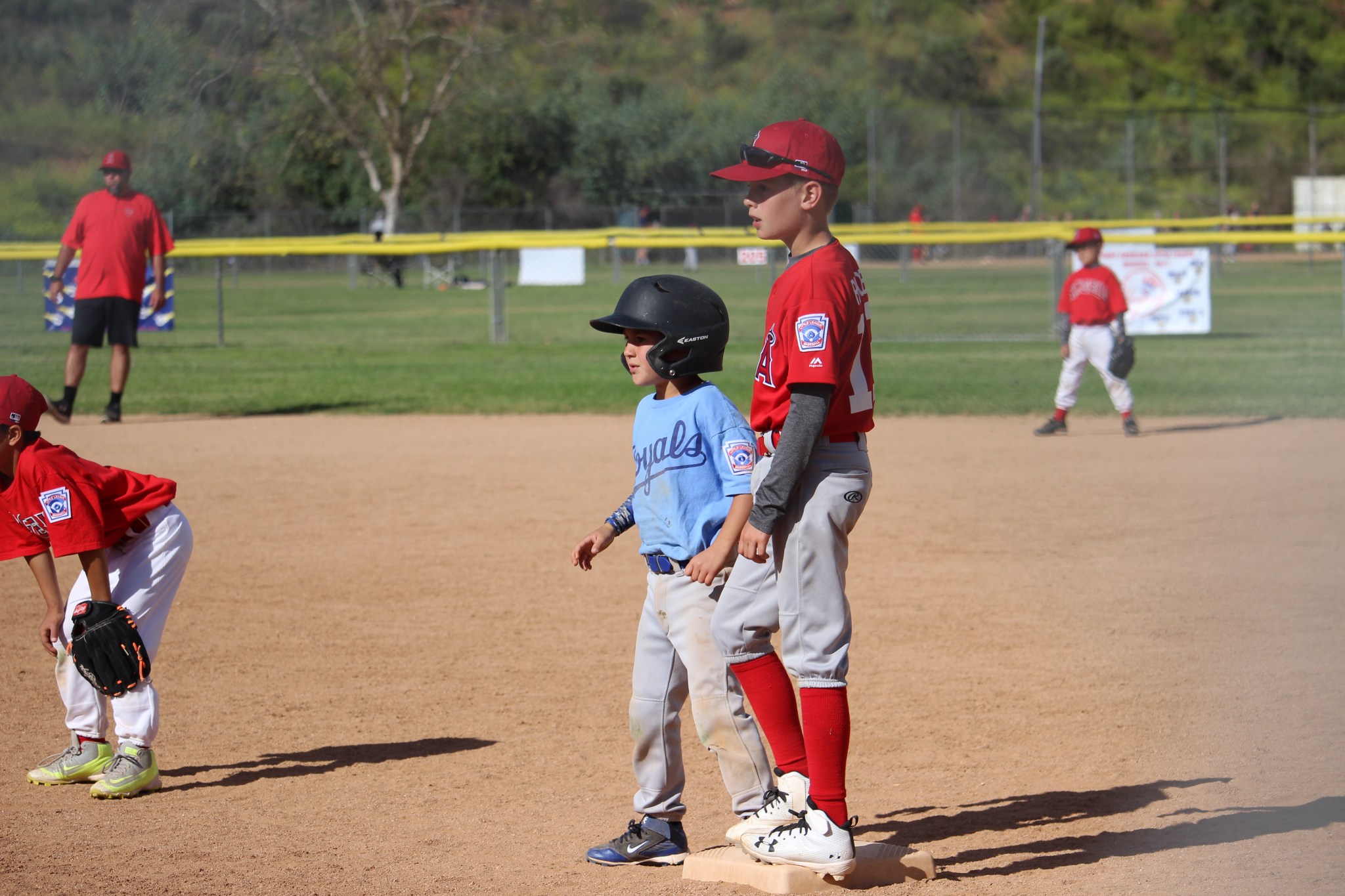
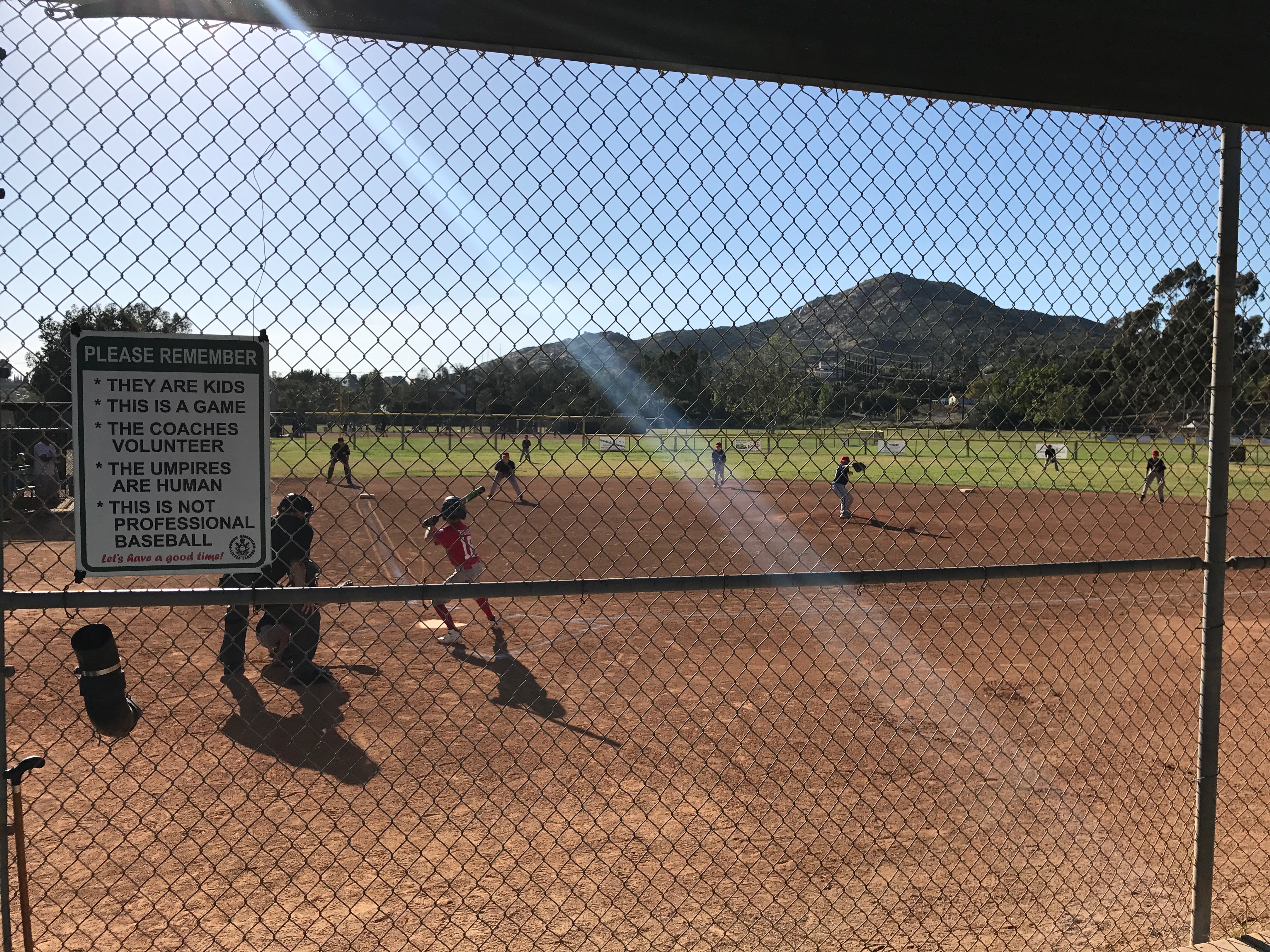
We’re in the home stretch of the Little League baseball season. Dane joined Abe and Roman on the diamond this season and once again we’ve had three boys on three teams playing twice a week since the beginning of March. Many of their games have been played at the same time making for some interesting viewing experiences. More than a few times, I’ve stood on one field managing Roman’s team while watching Abe or Dane up to bat on one of the fields across from me. I typically run the pitching machine for Roman’s ‘Rookies’ team and take my time in between each pitch to see if somebody got on base, got out, scored a run, or made a defensive play.
Sara and some contingent of the grandparents are usually rotating from field to field catching as much action as they can. What is it about these activities that compel us parents to arrange our schedules, sit out in the heat or the cold, and devote entire days to watching our kids play sports? When our kids are out on the field, we focus on their every move. We may enjoy the conversation with other parents or the time out of the house or office, but our attention is constantly pulled towards the game. A few months back Abe was playing on an off-season soccer team with group of kids from different clubs and schools that didn’t usually play with one another. The dad who organized the group was the ‘coach’ by default. At one point, I asked him if he could provide any evaluation of Abe’s ability and any suggestions about how to help him develop in the sport he loves most. The dad said, “Honestly Champ, I know Abe plays well, but I couldn’t give you anything very specific…because I pretty much only watch my kid out there.” We laughed and I appreciated his honesty. As a dad, and not necessarily a coach, he does what we all do. Watch our own kids.
We are fanatics. Sports are an unique aspect of childhood that reveals the perils and joys of love. When we love our children, what do we love? Think of how sports differ from education. For all except those who homeschool, we drop our kids off at school and have little to do with their experience. We volunteer and are happy to help with homework but that is more of a chore than a blessing. Parents aren’t motivated to watch their kids learn in the classroom, but go to a baseball practice with a team of 12 year-olds and you’ll find a bleacher full of parents…watching. A younger team sometimes require the parents to be on hand, but what compels parents to watch their middle school kids take infield or hit 20 balls off a tee into a net?
Love motivates parents to be there, to watch each drill. This love enjoys seeing our kids use their brains and their bodies, and interact with other boys and girls. It is emotionally rewarding to see them make a good play or demonstrate good character. We have heavily invested ourselves into these mini-selfs. We long for them to know the joy we’ve known in success. We know there’s lessons to be learned in the highs and lows and we want to watch the story of their little lives play out. Parents hope for a good ending. A good ending to the game, the season, their childhood. In our culture, sports are one of the main areas where parental control begins to end. Parents are tested as they have great access to observe what their kids are doing, but not much control. When we entrust our child to a coach or teacher, the chords of control loosen. But we can’t keep away from the story. We absorb every detail. This love can go awry when we don’t let go or we stay too involved. Many of us try to keep our loving hands on our children, giving a little ‘help’ from the sidelines. Of course, there may be a time and place for this, but it’s often an expression of unhealthy control instead of love. Truthfully, we want to play God in their lives, controlling the outcomes. We may fear their hurt, and want them to avoid the embarrassment of a strikeout. Our insecurities may hunger for the praise that comes from a good hit. An ‘atta boy’ or ‘atta girl’ towards our child satisfies our longing for attention, the desire for some credit for their success.
From my own experience, this control surfaced from a subconscious place and revealed what was in my own heart, regardless what I thought my intentions were. In a heated moment towards the end of a losing effort at a soccer match a few years back, I shouted at Abe to “Go!” thinking he had given up. He looked at me startled and I could tell he was instantly wounded. “I am!” he responded. Looking around at the other parents nearby, I sheepishly backed a bit off the sideline, realizing I had been exposed. I was that parent we had talked about never becoming. But if you could only see my good intentions…I wanted him to succeed, I wanted him to feel the joy of winning. What I didn’t see was how my lack of control over his play made me want to play God and make something happen for Abe where it wasn’t my place. This disordered our relationship and created hurt where I could have been a source of hope. Abe hasn’t forgotten that moment, it comes up regularly. But usually we talk about how it changed things for the better. “You guys are good sideline parents,” the kids say now. “We never hear you telling us what to do,” they say, which is our goal.
This question about parental affection is relevant to our attempts at charity as well. In our fallenness, nothing is perfect and like precious metals, our purest loves are full of impurities. As the Discovering Light team tries to love the Arsi Oromo of Southeast Ethiopia, self-evaluation is our most important task. In the world of Christian community development, the last 10 years have had a constant flow of revelation from places like Africa and Latin America where efforts at charity from the West, from governments and many churches, have caused harm and stunted progress despite good intentions. We have been shown how loving attempts to help have hurt some people because those with the wealth assumed to know what is best for those with less. Many times the poor have been treated as helpless children instead of capable partners. The effects of this are well documented in books like When Helping Hurts and films like Poverty, Inc. (which I highly recommend you watch. It’s currently on Netflix, Amazon, iTunes.)
Like the chattering parent on the sideline who believes they are helping their son or daughter, their needs and deficiencies cloud out their potential. The end result is similar.
After we finished building a well in Kalo village in 2011, the community felt they had more needs we could meet. In one encounter, a village leader asked me to consider building them a school. They had the teachers, all they needed was a building. I asked who built their homes, and the other modest but suitable structures that lined the town square. “We did,” they responded. But I got a blank stare and a shoulder shrug when I asked why they needed us to build them a school. At that moment, I wondered if we had made a mistake building the well for them. As much love we poured out raising funds and organizing the project, providing access to water had not empowered them to use the resources already available to them. I feared we had added to their sense of adequacy and saw poverty as much more in the mind than material. This has led to dramatic shift in our approach to ‘helping’ the Arsi Oromo and we have seen how important it is to encourage capacity-building without doing for them that which they can do on their own. As hard as it is to let the struggle continue, allowing growth from the inside out to take place is the most loving thing we can do.
As it is with our kids, we love them by letting them succeed and fail on the field, with an encouraging and a hopeful attitude from the sideline. When the love for our children or those in need stifles them from reaching their potential, we must let go. In a few weeks, I head back to Ethiopia to continue this effort of empowering love that will produce flourishing families and communities. My role has increasingly become one of partnering, challenging, and encouraging leaders to believe in their own God-given potential and that of the Ethiopian people. This shapes the programs we support and how we interact with leaders. I seek to protect them from unhealthy dependence on their Western partners and lowering the expectations of the people they serve. God’s purpose for them is so much bigger than they’ve ever believed and we get the joyful task of helping them see how he loves them.
For our family, the school year ends in a few weeks and we have been blessed. Marni thrived in her first year of high school with excellent grades and a Varsity letter for her place on the Dive Team. Abe navigated his way through sixth grade well, juggling new friends, sports, and spunky little brothers. Dane came into his own this year in school and we have been so proud of his responsibility and persistence (He turned 10 today! And we have only one in single digits. Yikes!). Roman is the little firecracker bouncing from one activity to the next with joy and spunk. Sara and I have been adjusting to the new challenges of the children seeking independence in their own way. As they swing from needy to self-reliant, sometimes on the same homework assignment, we are learning when to let go and when to hold on.
One of the songs I remember hearing the most during my elementary school years was Lionel Richie’s “All Night Long”, a song that was on the Top 40 radio loop for years. A true classic tune with Afro and Latin flavor, encouraging men and women, boys and girls alike, to get their groove on, and not to stop until the sun comes up. It’s become a timeless favorite, sure to be heard on a wedding dance floor or high school reunion near you. It carries a great message. Sometimes you just need to put your labors away and cut a rug. And Lionel makes sure no one is left behind when promoting the international virtues of a dance party. “We’re going to party! Karamu, fiesta, forever! Come on and sing along!”
Until a few weeks ago, I was unaware that All Night Long was such a fitting theme for a major Ethiopian Orthodox holiday called Timkat, or Epiphany, which is a nationwide celebration of the historical baptism of Jesus by John the Baptist. I reached Addis Ababa early on a Tuesday morning in mid January. After a shower and a bit of rest, I headed to meetings with one of our partners. After a comfortable night’s sleep at my good friend Ephrim’s guest house, I left in the morning for another day of meetings. Late in the afternoon that second day, my driver Arega and I headed to a hotel across town that was to be my homebase for the rest of the week. In passing conversation, the crowded roads of Timkat had come up and I remembered having some trouble driving around Awassa during the holiday a few years earlier. But that didn’t prepare me for what was to come this time, especially in the densely populated and largely Orthodox city of Addis.
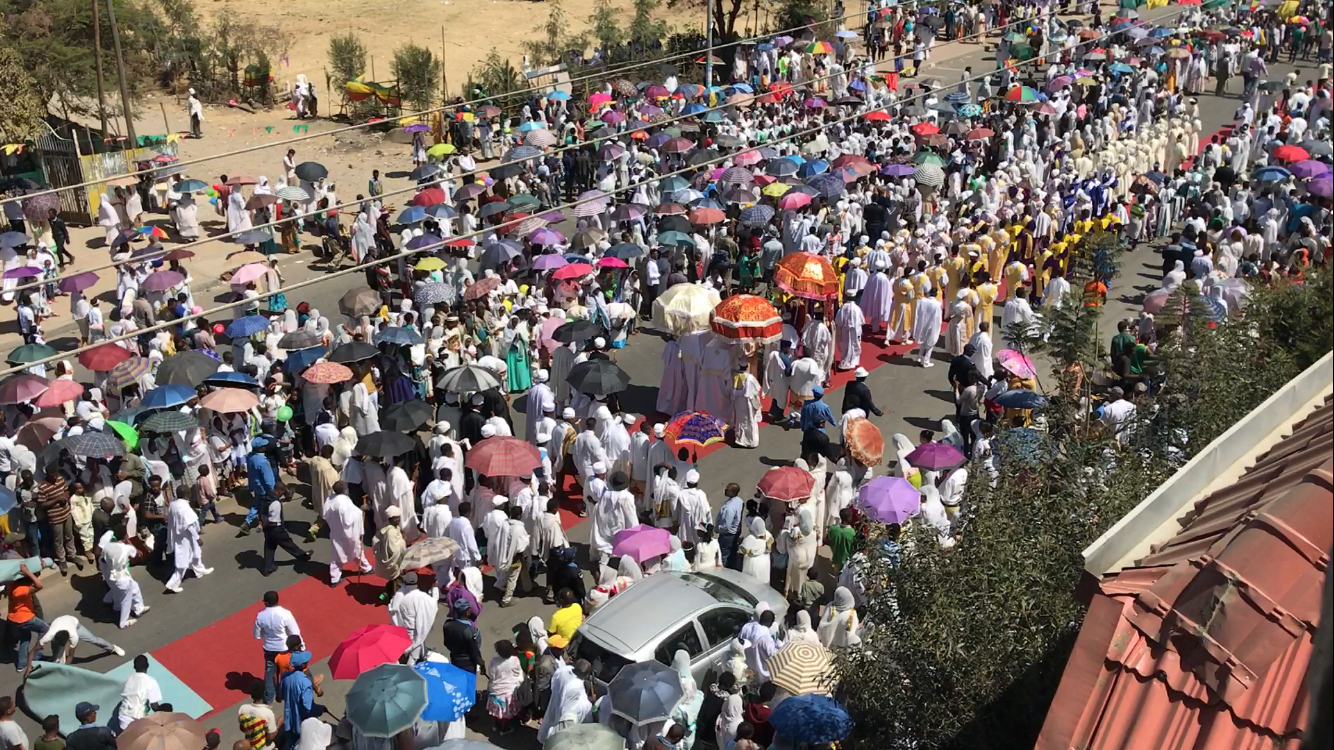
I knew the city layout well enough to know our drive should take about 30-45 minutes, tops. But as we tried to enter the first major thoroughfare only to be sent back into the neighborhood, I knew we were in for an adventure. Women in white robes filled the end of each alley that led to the main road. They represented thousands crowding each intersection and lining the sides of the road waiting for the Orthodox priests to carry small replica Arks of the Covenant from the church to an open field where the celebration would continue. Arega and I traversed every back street possible to finally reach our destination 2 hours later. We joked that while GPS isn’t functional in Addis, the People Positioning Service was highly effective determining which roads were open and which were not. The last half-block of our journey had to be walked because, to my great surprise, the Bela Hotel was directly across the street from a large Orthodox church and the street was full of people. I weaved my way through the throng into the hotel lobby and then up to my third floor room. From my window, I had perfect view of the crowd and as I was getting settled to what I hoped was a restful, quiet evening, the scene outside was becoming more lively. Words don’t do it justice.
More than a thousand people filled several blocks up and down the street. The church was directly across the street and next to it was an open field with a tent and stage at the far end. The ‘worshippers’ cheered intermittently and could be found circling up in smaller groups dancing to their own songs while several carried beats on drums hung around their necks. Apparently, I had arrived before this church’s formal celebration had begun with its procession through the street – that’s what the crowd was waiting for! Shortly after I unpacked my bag, I looked out to see the priests exiting the church gates onto the road, carrying little multi-colored arks and extravagant umbrellas as red carpet was rolled out beyond their steps in 20 foot lengths. As they passed each segment, young men rolled up the dusty carpet and ran to extend the path in front of the clergy. Singing and dancing swelled on each side of the walkway. Some bowed as the arks passed by. Jubilation followed as the priests took the slow walk about two hundred yards to a stage where the arks would rest.
To this point, I was excited to witness such an authentic cultural event up close for the first time. The fervency of worship that seemed to spontaneously arise from the crowd was fascinating. The colors and sounds were unfamiliar, a bright and vivacious public display. I videoed from my window in order to share the experience with others. As the sun went down, the celebration began to take on a more somber tone, and little did I know the ‘festivities’ were just getting started. As many worshippers as would fit, filled the field adjacent to the church (across from the hotel) and lit candles where they sat under the moonlit sky.
From the stage, and out of several loud speakers came the voice of one of the priests. What sounded like a prayer lasted several minutes. Then came some fiery preaching. For the next 20 minutes, I got the sense the pastor was giving the “I hope you really understand why we’re all here” message. Adamant and authoritative. About 15 minutes in, it was apparent he wasn’t sure if the crowd was getting the message. Now, I couldn’t understand what he was actually saying, but we’ve all heard a preacher who isn’t quite sure if the congregation is picking up what he’s laying down. He went on and then after a few minutes break, another guy picked up the mic and had his own message to give. Several others took a turn speaking to the crowd and by now it was after 9 PM. After some intermittent pronouncements from the speakers, vocalization that resembled wailing came from the loudspeaker. The volume seemed to rise and the noise was so loud it drowned out the announcers calling the soccer game on my television. A heavy bass drum played in the background. “Thump….Thump….Thump”. The single pane window in my hotel room was shut, but it wasn’t doing much anyway. The more I listened, I could tell what I was hearing I was some form of ‘singing’. The all male late night Orthodox choir from South West Addis Ababa was just warming up. The vocalists went on, and on, and on…and on.
The sounds ranged from a deep guttural bellow, to a light, elongated note and any syncopation with the drum beat was unclear to me. I waited until about 11 p.m. to really try to sleep, quite exhausted from my meetings and fearing the dreaded ‘second full night’ when jet lag often sets in. The singing was as strong as when it began and the drum continued its slow monotonous rhythm. Silence would come for a moment and I could feel my tense body relax, knowing subconscious sleep was at hand. Then thump….thump…the drum and the wailing song continued. A similar pattern lasted until four in the morning when finally, everyone decided to rest. In the meantime, I had stuffed my ears with tissue while laying sideways on my pillow with a hand towel over the other side of my head to try and muffle the sound emanating from the world-class speaker system the church was using for the celebration. I’ll leave my story there other than to say I found another hotel for the next night, unsure of whether the festivities across the street would continue after a less than confident answer from the hotel manager.
The View on Day Two.
My twelfth trip to Ethiopia was unintentionally one of the most eventful. Ironically, staying in the more developed Addis Ababa was more complicated than the quiet, emerging city of Awassa to the south. I had a productive week of meetings. Spending time in an office or coffee shop evaluating years-long projects is an important, yet mostly uneventful process. It doesn’t lead to exciting tales of missionary adventure. The adventure of this trip was incidental to the purpose of my week in Ethiopia. But experiencing Timkat up close and personal reminded me how little I know about this nation that has consumed so much of my time the past 7 years. Ethiopia’s political turmoil of the past two years has fueled my deeper exploration into the the history its ethnic groups (or tribes) and evolution from an empire to fledgeling democracy. The colors, sounds, and expressions of devotion during this three day celebration that led to extended drives and an unintended all-nighter pulled a bit of a layer from my eyes. It gave me a visceral experience of their humanity that is missing from strategizing and analyzing statistics.
There was a freedom emanating from the crowds lining the streets that is not experienced throughout all of life in Ethiopia. I’m intrigued by what inspires that kind of effusive joy that seems compartmentalized to holidays. Our work is not primarily in areas heavily populated by Ethiopian Orthodox but the Arsi and Bale region has many Orthodox and Protestant families living among the dominant Islamic communities. They share a common experience and history that shapes their culture. My encounter in January motivates me to learn more. I want to know about similar experiences of the Muslim Arsi Oromo. My all-night long of forced celebration with a couple thousand Ethiopians underscores that if I am going to learn more, it’s going to take a certain kind of sacrifice. I must commit to spending the time, to listening, and in this case the endurance of a sleepless night. Yet, maybe a more fuller picture of their life will provide keys to unlocking the abundant life we long for them to experience.
To have a purpose, to be needed, to feel important to others. These may not make the essentials list like food and water but our personhood is deficient without them. Once a child can feel even the smallest bit of purposefulness to his parents, he’s on it! When Roman was barely 2 he used to soak himself ‘doing the dishes’. His scrubbing skills weren’t refined but I could get quite a bit done while he sloshed around on a stool at the kitchen sink. As kids grow, they become less interested in being “mommy’s little helper’ as that desire to becomes more selective. Getting our kids to do chores around the house these days is the proverbial teeth-pulling exercise. But a few weeks ago, Abe, Dane, and Roman had the opportunity to be ‘water boys’ on the sideline for the Cathedral Catholic High School football game and I guarantee you’ve never seen a group of more motivated humans.
Watching them from the top of the stands during the pre-game ceremonies, I was unsure what the Rhodes boys would actually be doing. They practiced filling water bottles at the tank and then roamed the sidelines somewhat aimlessly for the first few minutes of the game. I was concerned boredom might become a factor and who knows what else after that. But when the first timeout was called on the field, to my utter surprise, Dane burst through the mass of red and yellow crowding the sideline, waddling into the huddle with a carrier full of water. There he was, in the middle of the field at the 25 yard line, bouncing around, poking a Gatorade bottle into every hand that would take one as the offense prepared for their next series. I could almost feel Dane’s pleasure when a player patted his head in gratitude as he headed back to the sideline. This went on the entire game as they took turns filling bottles and racing around making sure the Dons were hydrated.
The boys were so zoned into their job that when the team headed to the locker room at halftime, they followed the herd! We scrambled from our seats in the bleachers trying to figure out a way to head them off, certain they were to hear and see things we typically try to avoid. But they disappeared in the flow of players and coaches and all we could do was laugh, counting the minutes until they would emerge with what stories to tell! As the team returned to the field with a steady jog, our boys joined in, chests out as if the crowd was cheering for them.
The ‘water boys’ psyched for the second half.
I can’t help thinking of their experience when I consider the unrest that has overtaken Ethiopia the last few weeks.
Returning from Ethiopia September 18, I was encouraged by my meetings with our partners. “Things” are headed in the right direction. Our goals of a movement characterized by people embracing abundant life is still intact. The Savings Group program is close to running and expanding itself without paid facilitators (what we’ve been supporting for 5 years). Leaders are leading people to lead people to Jesus and train new leaders among those following him. I gained confidence meeting a new regional director for the organization supporting our small business development. There were more positives but beyond all this, the stirring of civil unrest rooted in years of tribal and political conflict was most impactful.
Short explanations don’t paint a full picture but this summary may help:
(Read the entire article for a fuller understanding of the situation.)
On the surface, my travel was the same as usual. The only sign of protests or property damage was in the rumors sprinkled throughout my conversations with the nationals. But in the last few weeks, conditions worsened and caused alarm when places we are very familiar with became the flashpoint of turmoil. I wasn’t concerned for my safety three weeks ago but if my trip began today, I would probably choose to stay in Addis Ababa where security is highest.
Women mourn at the funeral for Dinka Chala, a schoolteacher who family members said was shot to death by military forces during a protest in Holonkomi, in the Oromo region of Ethiopia. (Tiksa Negeri/Reuters)
It took several years of visiting before I started to understand a bit of Ethiopia’s history and contemporary political and economic environment. I always had lots of questions driving through the countryside, especially as I learned nearly every factory or large farm is foreign-owned. And as I’ve written before, my excitement about the new expressway was tempered with concern for the rural villages it seemed to slice through, even though it reduced our drive time.
I’m not naive about the growing pains nations experience climbing out of subsistence living. Modernization and industrialization is surely to discomfort some and unsettle traditional living practices. The question is whether this process is a ‘rising tide lifting all boats’ or a tidal wave that wreaks havoc on the poor, weak, and vulnerable. ‘Successful’ nations like ours have flaws and made considerable mistakes along the way to prosperity. But there’s a reason the West continues to attract millions of immigrants whether they are well-received or not. There is an essence that inspires the pursuit of the American Dream that I contend hasn’t been unlocked yet in Ethiopia.
I often wonder whether families in the Arsi and Bale zones away from the cities are much aware of the government’s development plans or foreign investment that haven’t affected them directly yet. After years of observation, I can’t imagine a farmer has time to concern himself with much else other than his daily survival. Nevertheless, I’ve witnessed a discontent in the villages of Arsi Negele that is likely found in the hearts and minds of those in the crowds of protesters.
The millions who haven’t benefited from the rapidly rising Ethiopian GDP feel undervalued. Even if the ruling party see themselves as benefactors helping these poor rural masses stuck in the pre-industrial era, their paternalistic ways adds to the low self-worth that pervades the culture. Add a real or perceived oppression that silences opposition, and you create a volatile situation we are seeing play out now.
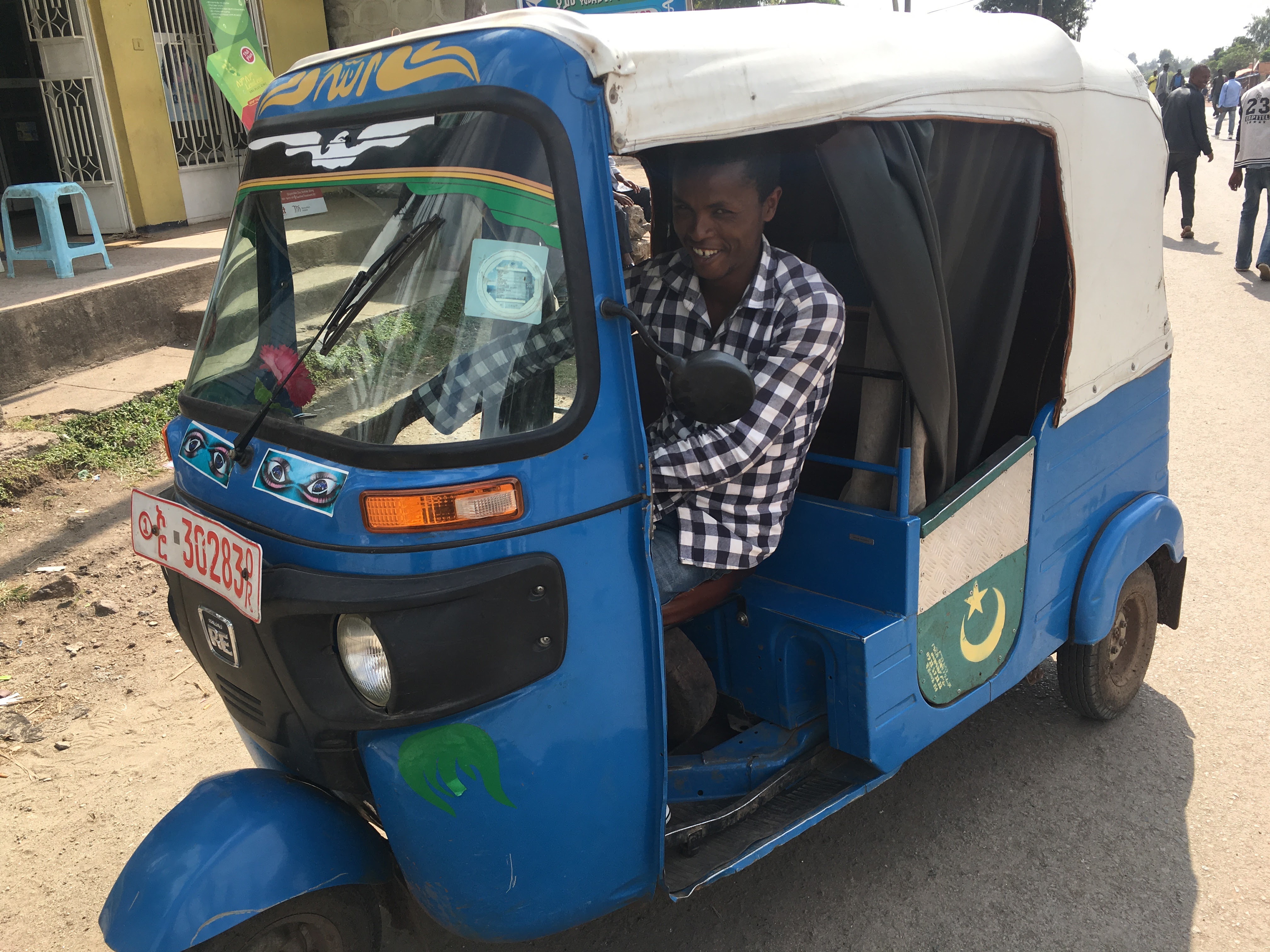
This antithesis is found in one Muhamed, of the thresher owners Discovering Light helped to start a business in 2012. Muhamed found out I was in town last month and wanted to make sure he could see me at least for a few minutes. He was so excited to share his success, and how he’d used his earnings to start a taxi business, offering driving services between harvest seasons. Our loan four years ago did more than just give him an income-generating opportunity. We affirmed his inherent worth. The program wasn’t close to perfect. But it gave Muhamed a purpose, a path to serve and demonstrate his value daily to others and himself.
Muhamed is all smiles in his fresh blue taxi.
The combination of joy and determination that characterized Abe, Dane, Roman on the Cathedral Catholic sideline is a microcosm of Muhamed’s experience over the past few years. There’s very few motivators as powerful as feeling important and useful. The satisfaction of a good job is in far more than just material benefit. That sense of purpose must be unleashed throughout Ethiopia for there to be sustained peace and true prosperity. The Savings Group program we support always starts with the poorest of the poor to break down class barriers and send a message that anyone can lift themselves up, serve their neighbors, and be the agent of change in their community.
Any development that fails to empower the least as well as the greatest will be hollow. It’s easy to see why. Just imagine the trouble if we had told Dane he wasn’t cut out to be a water boy and he had to watch Roman and Abe have all the purposeful fun. The Oromo, Amhara, Tigray, and other tribes all have the same desires. They don’t want to be left out, spectators in the development of their communities. Every Ethiopian deserves to be treated as inherently valuable and worthy contributors to the advancement of their nation. May it be so.
Pray for Ethiopia in this state of uncertainty (as well as Emergency).
You are most likely carrying the virus that causes Mononucleosis. I bet you didn’t know that. If you’re like me, you thought it took making out with the wrong person sometime in the late high school years to get this dreaded illness. According to youthful legend, Mono was the called the “kissing disease” because of the ‘interaction’ associated with it, which made it about as embarrassing as it was painful. Anyone who tried to oppose the suspicious inquiries of “Who’d you get it from?” was met with a hearty “Yeah, right!”
Little did I know nearly all adults carry the Mono-inducing Epstein Barr Virus whether they’ve ever experienced the symptoms or not. And, they can be even be contagious without getting sick themselves. (Google ‘Mono’ and you’ll get all the details.) Not only that, but people of all ages, including children can contract the illness. We learned this the hard way last week when we took Roman to urgent care after 5 days with a fever and bulging lymph nodes. The doctor suspected Mono pretty quickly and our hopes for a quick antibiotic solution were dashed when he called to confirm a few hours after the visit. All of a sudden our summer days of planned activities changed and we began adapting to life with a homebound child for at least the next few weeks.
Turning a disappointment into an opportunity: Dane and Roman’s impromptu lemonade stand a few days after contracting Mono. (Dane handled the food and drink.)
After a day or so of lying around, extended movie watching, iPad games, milkshakes, and donuts were little consolation for the little guy watching his brothers and sister head out to the beach and pool. We may have been the only family in America that sent several of their kids on a secret mission to see Finding Dory to save a sick child some disappointment. Bless his heart, he’s kept his chin up and is now improving daily, and mom and dad are grateful for the blessing of just a slightly more than minor illness, knowing others in our community who aren’t having it as easy as we are. Yet, four-plus weeks of limited physical activity to protect a compromised spleen seems like an eternity. Every person we’ve met who’s had the virus has given the same description, “It was horrible!” I haven’t asked any to elaborate on their experience but I definitely wonder what long-term impact these few weeks will have on Romey’s little mind and heart. What does the world look like through his eyes right now?
The mono experience is most certainly his first disappointing life event. As far as I know this is his inaugural encounter with natural circumstances beyond control affecting his daily life. Adults often tell of moments in childhood that shape their outlook. A family move, a lost friend, a teacher’s scolding; or positively, an award, a successful stage performance, an unexpected friendship. You might have seen how Pixar highlighted the role these “core memories” play in the delightful film Inside Out. (Yes, this is the second Pixar reference in a row.) Will Roman’s Mono summer shred a previously held belief in some worldly good? Or possibly give him a deep appreciation for the life he enjoys. If Inside Out was accurate, this summer will be monumental on a subconscious level, at the very least.
There is a complexity to how we look at children in our culture that I’ve never explored during my time working in Ethiopia. I’ve spent time with kids, asked them simple questions about their life and such. But not much further. I’m intrigued by how they process life’s events. Their normal is so intense. Watching mom and dad struggle daily to provide and ration provisions with many family members must be weighty. Statistics show child mortality has decreased considerably in Ethiopia over the last 20 years. Yet, children are still more likely than not to have at least one brother or sister or a neighbor’s child pass away at a young age. Illnesses we almost never have to face effect young ones regularly. Pneumonia is the leading cause of death in children under 5. Parents suffering from HIV/AIDS is common, albeit less than some other Sub-Saharan nations. Air pollution in the home is prevalent with cooking and heating on open stoves with coal or dung, leading to chronic respiratory problems. Girls Roman’s age typically begin helping carry water and collect firewood. That they learn hard work at an early age is an understatement. Boys are likely farming in the field with their fathers and older brothers by 6 or 7 laboring themselves or watching a monotonous routine produce barely enough for their family.
How do the precious children of Southeast Ethiopia see the world in light of these experiences? Roman has heard dozens of encouraging and uplifting responses to every realization of disappointment during his few weeks overcoming Mono. What messages does Yohannes hear when the family is done burying his little brother after losing his battle with dysentery? Roman will at least hear how unlikely he is to ever face something like this again which is statistically true. Yohannes may wonder, am I next?
Watching Roman these last few weeks has given me a window into how impactful childhood events can be, in particular, those of the natural variety. We experience so few moments out of our control that when something like Mono occurs, it’s assaulting. I’ve watched Roman rage and weep several times over the last few weeks in what could be a microcosm of what someone with a more serious illness like cancer goes through.
Overcoming a fatalistic mindset is one of the greatest challenges our community programs are working to overcome. It’s not hard to see why.
Our little friends in Ethiopia see an entire world that is out of their control. At least it seems that way to them. The kind of change that would make young Yohannes experience life more like Roman is not likely to come while he is young. A generation or two, maybe three are required to persuade a people they can have far more dominion over their life and livelihood than they do now. Overcoming a fatalistic mindset is one of the greatest challenges our community programs are working to overcome. It’s not hard to see why. When we meet families in villages, there’s a sense people feel we’re glad your here, but what can realistically be done to change my life? A legitimate question. Recognizing the disparity in average childhood here versus there helps explain why that perspective is so entrenched. It also explains why there is just as much desperation as there is dependence fueling hope in ‘hand out’ solutions to their poverty. According to facilitators, the first six to eight months of savings group formation are often spent helping the members save money as a discipline and combating disbelief long enough to demonstrate how the simple activity can make a significant difference.
A few days into Roman’s illness, he and Dane decided to make something of their afternoon (stuck at home) by setting up a lemonade stand in front of our house. I found myself uncomfortable, wanting to save the kids the disappointment of not making any money, but hesitant to quash their entrepreneurial spirit. Well, in a few hours they made $12 from a steady stream of customers stopping their cars to grab a snack and cold drink on a hot day. I was happy for them and even more thankful I kept my mouth shut while they were gathering supplies. The positive lessons they learned may be subconscious, just like any negative impact of Roman’s mono. Despite moderately challenging circumstances, the boys turned their ‘little’ into a lot. In a simple way, that is the essential message we have to share with our friends in Ethiopia. In the True economy, the little you possess isn’t a sentence but a seed of opportunity. Whether it’s the faith to begin a relationship with God himself or the small field that is ripe for exponential growth, the little you offer can become more than you ever imagined.
















 How do the precious children of Southeast Ethiopia see the world in light of these experiences?
  Keep Your Eye on the Rhodes