The Drive II


IMG_1853
A good drive requires the proper attire.

There’s a few commercials running for car manufacturers that highlight the pleasure of just driving in their vehicle. When one of these ads came on recently, Abe commented, “Who would just want to drive a car around?” I agreed, it was somewhat of a silly premise. But that’s the point the company is trying to make. You may not enjoy driving a great deal, but this ride is so appealing, you’ll make excuses just to get on the road. Crafty marketing, but I’m not sure how many customers eventually share this experience, whether they are satisfied with the car or not.

As our kids enter full-time activities age, a common lament of parents seems to be how much time they spend driving. I’m not sure how many find the “you’ll just want to drive this car” marketing convincing. The amount of drive time parents are subjected to makes many think they should don a black suit and chauffeur’s hat. A good modern day interpretation of “Home and Home Again” would be apropos.

Drive, drive drive, it’s a parent’s gig
Home again, Home again jiggity jig.

Piano, taekwondo, go go go!
Home again, home again jiggity jo!

Would love to chat but I gotta split…
Home again, home again, isn’t it time to quit?

No! Get to baseball, no time to rest!
Home again, home again, jiggity jest.

From event to event, all I do is run!
Home again, home again, is this what parenting has become?

Keeping pace can be a bear. I met a mother of four recently whose kids were all high school or older now that said all she remembers during her kids’ elementary and middle school years was driving from place to place every day from 3:30 to 7:30; and perfecting the art of slow cooking. We identify with her experience although we turn to Costco for its culinary perfection more often than not.

What should we make of this ‘rat race’? While I understand the wear and tear such busy schedules can have on families, I often wonder why parents describe their experience as though they’ve been enslaved by lilliputian rulers commanding rapt attention at all times. Rare cases of immature parenting notwithstanding, moms and dads have ultimate say in what their kids are doing.  If they’re too busy, cut something out. Paying for them to participate in an activity and then showing up and complaining on the sidelines about the tough schedule seems a bit goofy.

Yet, healthy debate about how our kids should spend their time is worthwhile and of course, every family is different. But back to the driving. For parents who do love what their kids are involved in, driving is a necessary evil, the price to pay for serving their kids needs and desires. But I’ve come to see that time as one of the most important parts of our day. Time in the car presents opportunities that are hard to come by elsewhere: A confined space with no escape route and no good excuse to avoid conversation.

At home, many distractions and other important (or unimportant) tasks create a challenge to connecting with our kids. Any moderately serious topic requires a respectful request for permission that inevitably makes for awkward moments. Parents set off the alarm bells with the approach: “Can I talk to you about something?” While the response from the kids is usually something like a nervous “Uhhhhh……OK?” Or better yet, “What did I do?” In other words, “this is going to be painful.”

But in the car, permission is not necessary. Jumping right into, “How are things with…so and so?” is more palatable for some reason. Follow up questions are acceptable too. And if they’re not, too bad kid because you’ve got nowhere to go. At home, trying to pin them down to get serious or just hear how the day went is like talking to Dug the Talking Dog from Up. “Squirrel!”

There’s all kinds of other benefits to spending time on the road with our children. When they all sing along to every lyric of the latest pop songs, you get a feel for the cultural influences at war for their soul. Which of course leads to deep spiritual discussions about the meaning of life and God and whether you should just Love Yourself or Shake It Off. And nothing ‘boils the sin out of ya’ like a good fight over what seat you should have and whether your whole butt has to be in the seat to claim it, or better yet, whether ‘Shotgun’ automatically means you get to sit up front. But….this exasperating experience is one I’m glad to have for the time being. QT with our kids that I can hardly get anywhere else.

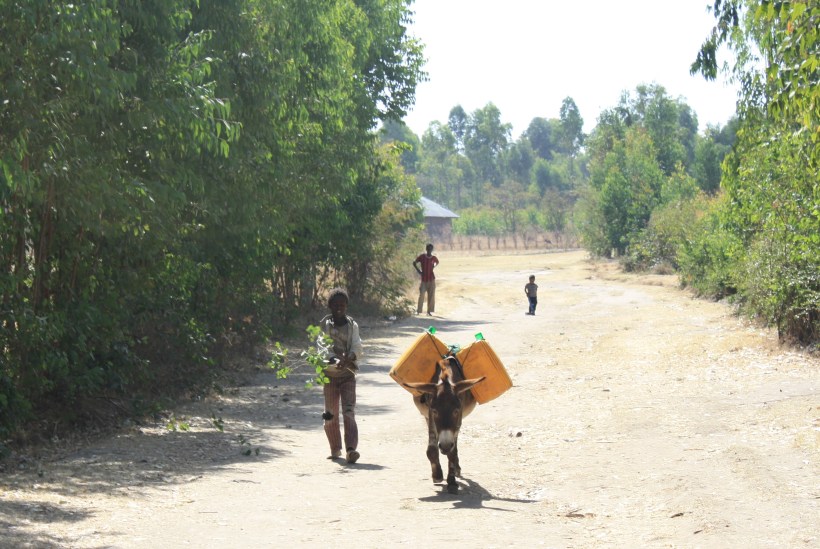
My perspective of drive time may be colored a bit by the hours I’ve spent on the road with our partners in Ethiopia. At least twice a year, I travel 20 plus hours by plane to Addis Ababa with a five our drive to the South awaiting me when I arrive. I plan my trip with the intention of arriving in the morning with as close to a full night’s sleep as possible. I want to be ready to connect with my friends and colleagues. And when our time in the South is done, the ride back to Addis is always an important time to debrief. Much of our strategy has been forged on the two-lane country highway from Addis to Awassa. The training approach of our spiritual development program came about after 3 hours of back and forth discussion in the car a few years back.

Moreover, the time allows us to have long conversations filled with more than just ‘nuts and bolts’. Experience, emotions, history, and context are expressed bringing clarity and understanding among one another. Something more personal takes place on the road than in the office that allows deeper relationships that are key to our cross-cultural productivity. Ethiopian Airlines recently opened a route from Addis to Awassa that would cut down my travel time by several hours. There may be some benefit to this in the future but for now, I don’t want to lose my drive time.

In the same way, I’m sure there’s an alternative perspective that questions our kids’ abundant activities and required driving. But I’ll take the hours we have together because it will gone before long. Hopefully, our relationship will flourish, even when our services are no longer needed.

 

We Can’t Solve All The Problems

Most of the time when I tell people about Discovering Light, they respond by saying something like, “That must be rewarding.” Others say, “You are doing some real good.” Both statements are true I’d say. Something else is true about our work. We’re not solving all the problems. In fact, while we’ve made a steady shift to addressing what we believe are core issues in rural Ethiopian villages and families, history shows there’s most likely a ceiling on the impact of our efforts. The best poverty and international development research shows things like rule of law, property rights, and economic freedom are essential to achieving and sustaining prosperity. We’re definitely making a significant impact, not just on individuals, but on whole communities. And initiatives like savings groups and our discipleship strategy are capable of producing movements across entire regions. Some signs of this are already evident.

IMG_1899
My realistic friends at Horn of Africa.

But we’re not fooling ourselves. Our potential is limited.

Discovering Light took a long look in the mirror a few years back and determined how to use our resources for the most good in Southeast Ethiopia. That included less emphasis on clean water and more on addressing cultural obstacles to establishing strong families and communities. We decided this was the best we could do, considering all the facts on the ground, if you will. Whatever impact we were going to have on clean water was going to be mostly indirect. So there’s smaller problems like water for a village, and bigger problems like rule of law for a nation that we aren’t going to solve. While some discussion around how to deal with these challenges is worthwhile, there really isn’t a question of whether both are worthy causes.

IMG_9066
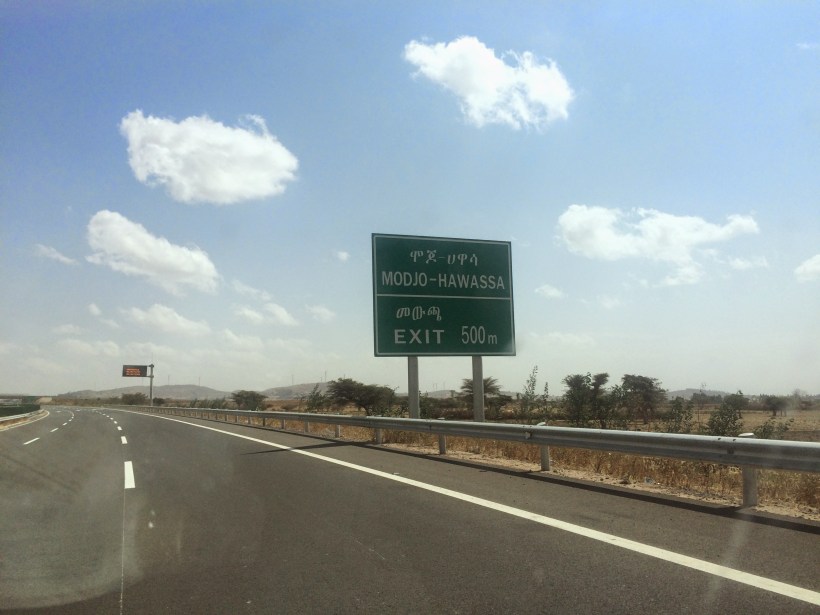
This highway means solutions for some and problems for others in Ethiopia.

The more I learn about Ethiopian national life and politics, and the history of successfully ‘developed’ countries like Japan, South Korea, and Israel, to name a few, the more I wrestle with our distance from the ‘macro’ issues. If our impact has a ceiling, should we not be doing something else that can accomplish more? Part of my fear is that all our great work could be swept away in one crisis like the one brewing between rural Ethiopians and the government in Addis Ababa. At the same time, when I ask the question, “what can we do” to address ethnic conflict or establish property rights, I find few answers. We just can’t solve all the problems.

In our day of global consciousness, unrelenting technological advances, and ‘everybody can start a startup’ mentality, a false sense of power is easy to embrace. “We are the change!” Not so fast. I may theoretically provide access to clean water for one family with a $50 donation or teach a young women the skill of saving for $25. But a healthy awareness of the whole picture is essential.

As usual, these reflections can apply to our role in foster care. So far, we’ve only impacted the four children in our care and their families. There’s been indirect impact on other individuals, but we’ve had no effect on the overly bureaucratic and overworked state and county social services. We aren’t involved in improving the adoption process or making addiction recovery more holistic. Our family has just been taking care of the babies and encouraging their parents. And just recently, we decided to ask our agency to find another home for our current placement. After several months caring for a little girl, we realized our family life was suffering in some unhealthy ways and we needed to reassess our role in foster care going forward. Even for this one, our capacity is limited.

Some people will hopefully one day lead a healthy political and economic transformation in Ethiopia. I doubt Discovering Light will play a role. Foster care in California may improve dramatically someday. But our names most likely won’t be in that story. We have a role to play, a calling to fulfill. We can give it everything we have using all the resources available while humbly acknowledging we can’t solve all the problems.

The Drive

A few days ago, while getting some work done in our neighborhood Starbucks, I realized it was being used as shelter for a drug deal. The two young men didn’t look well when I first glanced their way sitting down with my laptop and latte. Their clothes were relatively clean and fresh, unlike their faces, that had the worn look of one morphing into a drifter. One of them left, leaving seemingly without destination. The other picked up his flip phone and made a call mumbling something about where he was. In a few minutes a boorish-looking young woman came in and sat down and handed him some pills, trying to look discreet. He promptly popped whatever she gave him in his mouth, without so much as a sip of anything to wash it down. They didn’t seem to care that I was there, and I tried not to appear obvious as I observed the scene. The exchange complete, they chatted for a minute about a fight he was in earlier and she left.

The young man sat there, fidgeting with his beanie and looking at his phone for a few minutes and then walked out. I watched with sadness as he slinked down the sidewalk and met the friend who was originally sitting with him in the coffee shop. Who were those boys? What is their story? What ache was the drug taken to soothe? What demon was he trying to appease? When I see someone so fragile, I’m reminded of the incredible will to live inside of every person. When pain seems so great, and only a slightly less painful fix will satisfy, why does one go on living? This is mysterious. I’ve had a similar feeling meeting men and women in villages around Arsi Negele and Shashamene. I remember being stunned by the daily survival skills required by every single family. Millions of men and women throughout America work incredibly hard and long hours. Those people are typically well-rewarded for their work. Recently, our boys have gotten a kick out of watching Mountain Men on The History Channel. These gritty men and their families test harrowing living conditions in extreme locations throughout the U.S., surviving off whatever they can eat, grow, or make from the land. On the surface, their life shares some characteristics of those I’ve visited in rural Ethiopia, despite several key differences. First, the Mountain Men have chosen their path. In fact, many of them are the last in a long line of generations that lived off the land but have slowly migrated to cities and less earthy careers. The land is like a calling to them, a source of joy and sustenance. Families in rural Arsi Negele are essentially stuck. The risk of pursuing city life, at this time, is too great to leave their small Teff fields.

MM

Additionally, the Men are rewarded generously through wisdom, ingenuity, and perseverance in the life they cultivate. What our friends in Ethiopia reap from their effort is not rewarding. Its enough to survive, but far from the thriving, vibrant life found in the Blue Ridge Mountains of North Carolina.

Which takes me back to my Starbucks junky. I’m assuming much about this young man but it’s not hard to guess where he’s headed. The desperation carved out on his far-too-withered-for-his-age face seemed destined for even darker days. What beyond another high is enabling him to live his days? For our Ethiopian friends who face daily challenges, devotion to family and fears of the unknown provide enough motivation to continue the monotonous farming life they always have. But what else?

The human spirit driving every man and woman is astonishing. Something inside every person compels them to get up and go every day, despite many opposing forces within and without. For some, the battle is easier than others. But, we still go on.

IMG_0199 (2)That drive that leads one to fry himself or others to work themselves to the bone for so little to show for it demonstrates the immeasurable value of human life. We are magnificent beings capable of incredible feats, even if the result is not much more than staying alive. The somber reality is that many are not living life as it was intended; they are “without God and without hope in the world.” Hope is possible without God, but it isn’t possible to be with God and without hope. And hope without God is temporary, at best. The surer our hope, the more alive we become. Our family’s joy in God and one another has overflowed into the hopeful pursuit of foster care. In fact, we cut our planned break from placements short just this week because we were ready to get back to the blessing of giving hope to a little one and her family.

In Ethiopia, we are committed to giving people the eternal hope of knowing Christ. But we want to instill a hope that enlivens men, women, families, and communities to experience more than meager survival. We hope to turn the fatalism and hopelessness that originally seemed to appear as laziness, into energized and creative pursuit of their human potential.

This is life as God intended. This is abundant life.

What Kind of Religion?

Last week, our second Baby D was reunited with his father after 8 months with our family This was a much different experience than our first Baby D for a number of reasons. We felt just as good about the care we provided and our service to his family, but the ties were not quite as tight and the sadness wasn’t as deep in his departure. We plan on taking a hiatus for several months, following 2 years of fostering infants nearly non-stop. (In fact, we took a 4 week old for a week after Baby D left to help another foster family. Oh man, was she precious!) This impending break has given us a chance to reflect on our experience and consider the significance of fostering.

Religion that is pure and undefiled before God, the Father, is this: to visit orphans and widows in their affliction, and to keep oneself unstained from the world. – James the Apostle

On the surface, this imperative from James seems to say God cares about religiosity and evaluates us based on a commitment to the cause of the fatherless. Certainly, compassion for the hurting and helpless is a reflection of the Father’s heart. But the message of Christ and his gospel is one of dependence on God. If our experience the past two years has taught anything, it’s that the purpose of God in revealing his character to the world through the self-sacrifice of his people seems to accomplish the concurrent goal of completely humbling them.

Baby D2 often found himself as our boys' center of attention.
Baby D2 often found himself as our boys’ center of attention.

By following God’s lead to make use of our parenting experience and blessing of space in our 5 bedroom house in comfy Poway, we’ve run into an emotional,spiritual, and practical Ninja Warrior course. Our patience has been tested countless times and in countless ways, with at-best, mixed results. The failures seem much more common than the successes. We’ve loved ‘our babies’ dearly, and strove to support their parents. But our frustration with their choices often boiled to the surface when the text came that baby’s dad was missing their visit for the second week in a row. Despite feeling justified, I was consistently reminded of my own mistakes and weaknesses and need for understanding and grace from those around me. So much for considering ourselves pure and undefiled.

We’ve all heard the phrase, “There are no atheists in a foxhole.” Fostering babies has served to help me realize “There are no saints during a mid-night feeding.” When baby wasn’t going to sleep or back to sleep according to plan, I often found myself exasperated, my ire directed at the helpless little child. Only to be reminded they are completely incapable of telling me what’s wrong and have no intention to discomfort me. But that didn’t stop me from taking offense. I found myself laying down after settling the baby, convicted and ashamed that I could have such horrible feelings toward such a precious being who deserved even more compassion because of the circumstances leading to their placement with us. What kind of religion was I practicing in these moments?

We eagerly embraced each of our three foster children. We really did want to love them, honor God, and witness to his love among lost and hurting souls. We wanted to be that kind of religious. We wanted to serve God and others. Ironically, our service to others has actually revealed our need for God’s forgiveness and help; and has thus been his service to us.

Another way fostering has exposed the meaning of ‘pure religion’ is by requiring us to rely on others and demonstrating the generosity of our community. Nearly every week during the past two years, Sara and I have sat down and looked at the upcoming events and talked through how we were going to manage (or survive!) them all. Work, appointments, games, practices, parties, bio-parent visits, and more, on top of housekeeping, yard work, meals, and bedtime. We are fortunate to live near our parents, and even more fortunate that they are healthy and love helping. They’ve played a major role enabling us to give ourselves to the foster babies. Even so, we routinely depend on friends for rides, childcare, and most importantly, loving our kids and taking time to invest in them. Additionally, we’ve benefited from a steady stream of gifts from clothing to baby furniture, and many other supplies. We stepped into fostering not really knowing all we were in for, but over and over God has shown us he knew all along by providing exactly what we need through the kindness of others.

Finally, this religion of caring for orphans and widows is ‘pure’ because it thrusts its participants into nearly every social issue of the day. What other cause engages poverty, drug addiction, domestic violence, family breakdown, single parenthood, homosexuality, government bureaucracy, immorality, crime, and injustice. While respect to others’ privacy prevents us from sharing many details, I can say without question we’ve been face to face with all of these. It’s not hard to imagine a scenario: a mom’s shoplifting leads to an arrest and home inspection, where evidence of drug use is apparent. Mom explains she has no money and is running from her baby’s father who beats her. She’s explains she’s trying to get off Meth but is a third generation addict with no family support nearby. The baby is taken by the police, run through the county placement system that takes a few weeks, then placed with a foster family who will conduct one-hour visits with ‘bio’ mom and dad twice a week until the court decides the baby can be reunited. After several months in their care, the family needs to leave the child for a weekend trip and the certified couple available are two gay men…

This imaginary case is nothing out of the ordinary from what we’ve seen in our two short years. Every child’s story has been jaw-droppingly incredible. And nothing surprises us any more. We are in the thick of almost every big ‘challenge’ facing our communities. But our attempt at difference-making has been primarily a faith-deepening slog. Each step has been a challenge for us to increase our dependence on God.

Time for a little rest.

Shortly after I began to work full-time for Discovering Light, a mentor told me, “It’s not uncommon when a family begins full-time ministry, for them to retreat, feeling like their work is ‘how they serve.’”  He then asked how we were planning to minister to others outside of my job. Obviously, every family must interpret and answer that question on their own. At the time I wasn’t sure our answer, but when we began to foster it became clearer. I’m sure he wanted to encourage us not to become unaffected by the needs in our community. But the most important reason for my mentor’s question, whether he realized it or not, was that we needed some form of ‘pure and undefiled religion’ to keep our hearts humble, reliant on Christ, the center of our Faith. We are so grateful for the gift of fostering the last few years. Thankfully, God also leads out of the fray into quiet places, where we can reset and replenish. So we’re taking some time for mercy instead of sacrifice, since that’s also the kind of religion he asks us to pursue.

Not Wrong, Just Different

I have the strangest job. This was my sentiment walking out of a two-hour meeting with one our partners in Shashamene during my recent trip to Ethiopia. We had spent that time discussing some programs and some general aspects of our partnership. As Americans, we have the privilege of not having to learn other languages to conduct most business around the world. The leaders we work with in Ethiopia all speak English at varying levels of competence. They’ve had to learn several languages and we appreciate the time and effort this has required. If they hadn’t, our organization would not be able to function as it does. Nevertheless, our attempts at an English conversation are a verbal equivalent of fence-painting. In order to ensure real communication has occurred, several steps are required. If I’m looking for answers to some questions, it goes like this.

  1. Question. This is usually stated in several ways before the listener ‘gets’ what I’m asking and begins answering. It’s not that hard to tell if the first attempt was unsuccessful. A ‘yes’ following an open-ended question is a common indicator.
  2. Answer. Depending on the detail, this may or may not require a follow-up.
  3. Reiteration:
    1. If no follow-up is needed, I tell them what I think they said. Like the ‘question’, I usually have to ‘reiterate’ several times to make sure I know that they know I know what they said.
    2. If follow up is needed, we go back to #1 with questions to get clarity. This process is repeated until we all seem to agree that we all know what we all said.

That process is just for questions. If I want to make a suggestion, or give direction, a similar set of steps is also necessary. Which means, a rather small amount of information can take a long time to process together. And lest I sound like this is a problem for us English speakers, I am keenly aware that our friends are just as confused with us as we are with them in these situations.

IMG_0284 (1)
Cross-cultural communication in action in Shashame.

That’s the language barrier, which was present as usual in my recent visit. Next you have cross-cultural challenges. Language gets mixed in here, but more in the nuanced meaning of words and phrases that don’t translate clearly. The culture factor can be summed up in one phrase: We do things differently. These ‘things’ come out in conversations, in management practices, in family dynamics, in conflict resolution. The cultural phenomena at play in my latest trip was ‘indirectness’, a common feature of Ethiopian communication. This quality can be a welcome relief from the straightforward American way of telling it ‘like it is’. Ethiopians are known for being pleasant and gentle. Even in moments of excitement, they demonstrate a calm demeanor. Indirectness is a blessing, until you need directness. Until you need to get an answer to how or why a ‘problem’ came to be. The trouble we encountered this time was that indirectness had kept a problem in the dark for over a year. Here I was, sitting in an office in Shashamene working  through a cultural barrier that took overcoming a language barrier to figure out. And in my American way of problem-solving, the only path towards resolution was through directness, which is a cultural barrier for our Ethiopian partners. Follow all that?

If that just sounds like a bunch of mumbo-jumbo, then you get my point. Its exhausting. And maddening. And absolutely necessary. This wasn’t my first trip on the merry-go-round of cross-cultural communication. But it had been a while, and I naively thought we had risen to a place of maturity with our partners that such difficult conversations and events were in the past. The ‘problem’ we were dealing with was definitely serious and could be detrimental to some of our efforts, although we are working on a responsible solution and believe all will turn out for good.

Some who have heard about or participated in these difficult situations have said they would have already quit the relationship with the Ethiopian partners involved. I don’t blame them. It feels highly unproductive at times. But moments of reflection help put things in perspective and bring a few truths to light. First, no amount of cultural progress I may possess can overcome my human fallenness and therefore recognizing God’s grace for me and our friends is non-negotiable. The Western directness that leads to honesty and efficiency, which I believe is good and the product of a Biblical worldview, can make me act like an insensitive jerk who comes across as accusatory. And when that happens, boy could I use a little of that calm, indirect, Ethiopian nature. The positive aspects of my cultural aren’t a license for arrogance.

Additionally, If our programs and relationships truly are for the good of our Ethiopian partners and the communities served, they deserve our unwavering commitment. Challenging communication and setbacks should be expected, even welcomed, and embraced with patience. There may come a day when one of our initiatives or relationships break down beyond repair, but we should exhaust every option before we cut our losses and move on.

IMG_9168
Patience required.

I tied myself up in knots, mentally and emotionally trying to process the meetings and conversations I had in Shashamene in June, considering the best way forward. I can’t help but see similarities between our relationships in Ethiopia and those here at home. I’m not sure if pink and blue earphones would be appropriate to represent the cultural differences I encounter, but the mantra Sara and I learned in the Love and Respect marriage course sure does: They’re not wrong, just different. Sure, we make mistakes, intentionally and unintentionally. But much of what surfaces as trouble in our relationships is because we view things differently. Same here as it is 9,000 miles away. And with our kids…and just about any meaningful relationship.

And thus, they require and deserve the same kind of grace, patience, and perseverance. Its easier to talk about and write in a reflection, than actually carry out. But these experiences in Ethiopia help remind me that I must.

Everything is Boring and That’s OK

Nearly 60 games for our three boys over the last three months have taught us one thing: baseball is boring. No matter what level we’re talking about, it’s boring. From watching all 13 tee ballers bat and run one base at a time, to an MLB game that ends in a 9-0 shutout (Come on Padres…get with it!), it is slow to say the least. That’s why they call it ‘America’s Pastime’, right? Its a way to pass the time! Not exactly the most inviting or intriguing description. I wonder if Tom Petty was secretly lamenting the humdrum nature of baseball in 1981 when he sang about finding true love. “Yeah, the waiting is the hardest part…”


You know what else is boring? Gymnastics. We’re learning this now as Marni has recently finishing her second full season competing in Trampoline and Tumbling. On a competition day, she does three events full of beauty and athletic skill, with precision and courage, lasting a grand total of 45 seconds, sprinkled over two or three hours of….waiting. Perfect for a few Instagram posts, but a long time to be sitting around.

Since we’re talking about boring, here’s another example: Surfing. Take a look at any lineup on the California coast and mostly likely you’ll see some dudes (and a few dudettes) just sitting there, like oversized seagulls looking out at the horizon. Then go to a competition, and you have an organized version of this ‘sitting’, except the ‘sitters’ are all in various colored lycra t-shirts. And if you are one of those ‘sitters’ or their fans, you typically wait around for a few hours to watch them hit the water for 15 minutes. And if they are successful, wait a few more hours for 15 more minutes. BOOOOORINNNNNNGGGGGGG!

You might not be able to tell if you attend any of these events, but sports like this are not life and death. But they do have something in common with other significant endeavors like parenting or community development. They are boring! Little shots of excitement here and there are dwarfed by the monotony of wiping slimy noses, midnight feedings, ending arguments, and making sack lunches. Similarly, plugging along with our partners in Ethiopia on programs like the Savings Groups and adapting our fundraising strategy is rather dull. International travel a few times a year gets the blood pressure up a bit. Dirt roads for a few hours to a baptism is enlivening. But those adventures are sprinkled in with the usual emails, newsletters, meetings, phone calls…drab stuff.

KidSports2 

It reminds me of a conversation I had with Abe a few months ago. He was upset about some of our neighbors moving away and expressed his great fear that his best friend Addison, who lives a few blocks away, would someday move to another part of Poway (the part with the bigger houses). When I asked why he thought that would happen, he said, “Because they’re so rich.” When I asked why he thought they were so well off, he said “Because Coach Paul (his dad) is a travelling businessman.” I gave him a hug and tried not to let him know I was chuckling inside. Abe’s idea of what makes a man rich is the amount of travel he does and I’m sure that the prospect of wealth on top of traversing the land for important meetings sounds thrilling to his little mind. But I’m sure Coach Paul’s job is boring too.

And that’s the point. Life is boring. Its slow, dull, and there’s a lot of waiting. Excitement is a fleeting pursuit. It comes and goes like the rain in San Diego. While this may sound disappointing, there is great comfort in the bleak prospects our long lives hold. Modest expectations for exhilaration free us to look at the simple and mundane tasks and find in them a lasting happiness and peace in the waiting. In Ethiopia, we’re trying to encourage a transformation that will likely take decades. We may just be the catalyst and never see the ultimate result. Depending on dramatic stories for motivation will leave us dispirited. We have to see ourselves like railroad builders, laying one tie down at a time with confidence that our effort will lead to meaningful change for hundreds of thousands of lives in the region.

Parenting is exhausting enough without holding out for the highlights of our children’s lives to keep us committed to raising good kids. Of course, when a child graduates or gets his first job, we can say the ‘hard work paid off’’ knowing we played a role in shaping their character and capacity. But delighting in the daily struggle is a much safer way for moms and dads to persevere.

Its those mid-inning laughs when a sunflower seed gets stuck on your teammates nose and nobody tells them. Its the conversation in between waves when your friend says something nonchalantly that becomes a life lesson you never forget (true story!). Its the midnight snuggle on the couch with the baby whose nose is stuffed and can’t breathe lying flat in her crib. Memorable moments that feed the soul without an adrenaline rush.


In the spirit of Aslan, one could say, life is boring, but it is good.

Give and Take

As mentioned in our New Year’s Card ( also known as a Christmas Card for the busy, unorganized family), our second foster child’s departure and return with her family was imminent. 18 month old Baby D went to live with her mom on December 29 after 14 months with us. It was a tearful day and melancholy week for our family. The initial sadness has been replaced by periodic twinges of the heart, when pictures or a memory of our little sweetheart comes along.

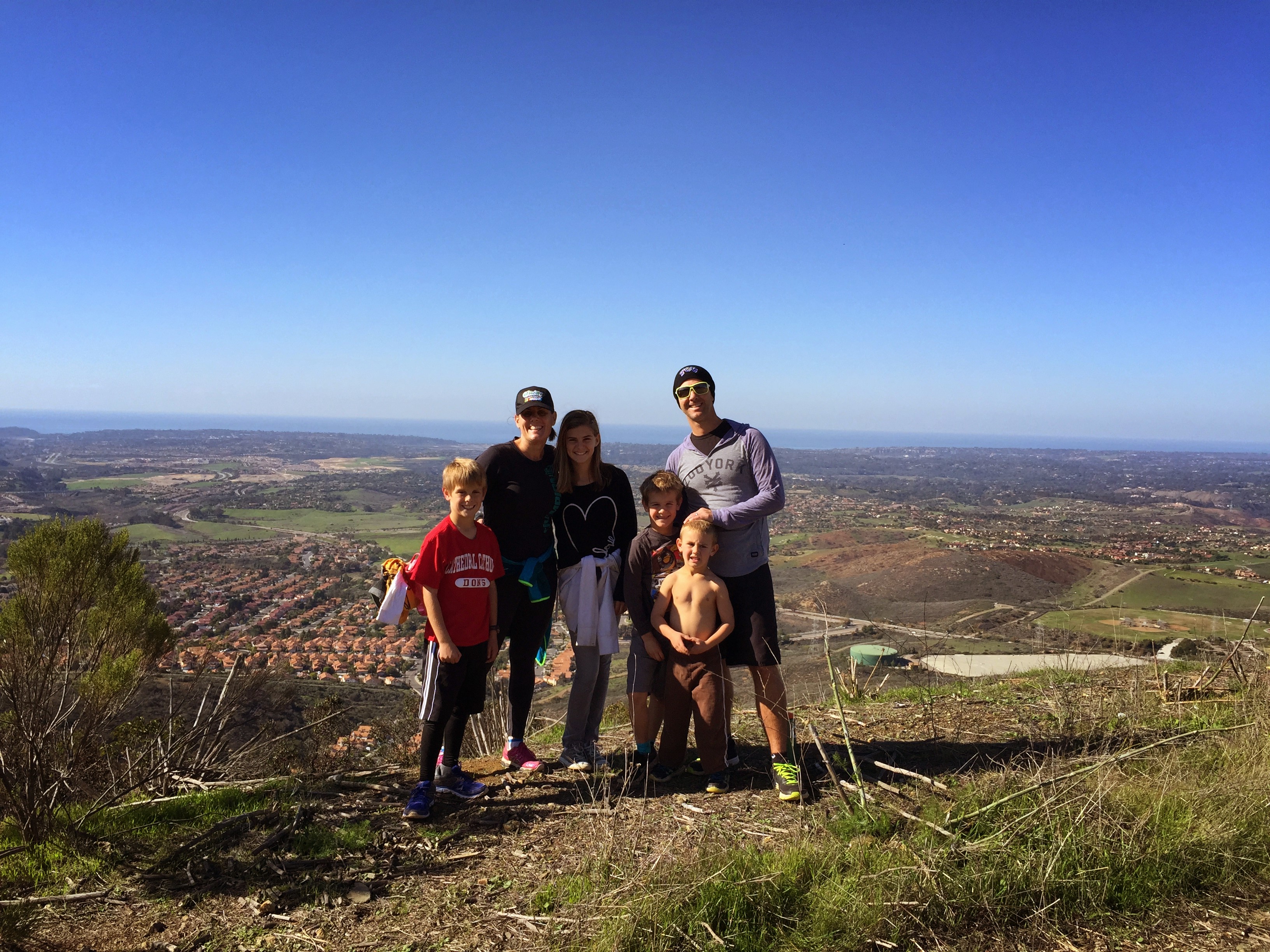
Celebrating the New Year with one of the best views in San Diego.

Having never experienced this kind of loss, we wondered how our family would fare. Thankfully, we huddled with with one another and were able to enjoy the New Year and get back to our normally wacky life together. That was until we welcomed Baby D2 into our home January 6. His first names starts with “D”, of course, and he’s almost 8 months now. He’s cute as can be and a tremendous blessing. Roman, Dane, and Abe like having a boy, even if they don’t quite get the fact that babies are fragile no matter what sex they are.

On February 2, I (Champ) shared some of our family story during the Sunday services at New Hope Church. My dad asked me to tie together what I do now – running Discovering Light – and the numerous paths our life has taken, beginning with a “call to missions” almost 20 years ago. That original event was during a message given by missionary legend Floyd McClung (@floydmcclung) where he shared his family’s harrowing and fulfilling story of ministering in the Red Light District of Amsterdam. He described how when a pimp threatened his life at knife point, he responded by saying something like, “You can’t take my life, I’ve already given it away,” echoing apostles, saints, and martyrs throughout the centuries.  On that night, I thought my main life “calling” was to unreached people groups, as he described the great need for missionaries among the hardest places.

What I’ve come to realize, which came out clear as ever in preparation for my talk a few weeks back, was the most important mandate on my life is continually giving myself to God, so that I can live generously without fear of loss. This has become our pursuit, our imperfect struggle, as a couple and family – the theme that ties all the twists and turns, those we’ve chosen and those chosen for us. The message I shared is below. Take a listen if you like.

If Taylor Swift Was a Foster Parent

“How do you love someone when you know they’re going to rip your heart out?” No, I’m not previewing Taylor Swift’s new album. Rather, that is what I think most people really mean when in reference to us becoming foster parents they say, “I don’t think I could do that.”

This is a valid question that becomes more challenging the longer we have a foster child in our care. We’ve grown to love Baby D yet know we won’t be able to raise her like our others. Like all good parents, we know our children are ‘not our own’. But we don’t live with the expectation that they are going to leave us soon.

IMG_7789-EFFECTS

Watching her fit in our family has been something amazing. Each of our kids has developed a special relationship with her. She knows how to say “Marni”, but Baby D replaced her name a while ago with “Let it go!” because she taught her to sing the hit song from Frozen. Instead of “Dane”, she learned to combine a greeting and his name, just calling him, “HiDane!” We intentionally tried to steer her away from calling us “mommy” and “daddy” but it hasn’t worked and she can regularly be heard celebrating Sara’s return with shouts of “Mama!”. Abe and D seem to operate on the same clock and the super big brother often pulls her out of the crib and brings her downstairs early in the morning before the rest of us. She’s adored by all. Yet sometime in the next…year…she’ll return to her mom and dad. What the living situation will be, we don’t know. What kind of room she’ll sleep in and what the future will hold, we won’t know. The unknowns make the known departure even less desirable.

Then they gathered around him and asked him, “Lord, are you at this time going to restore the kingdom to Israel?” He said to them: “It is not for you to know the times or dates the Father has set by his own authority. (Acts 1:7-8)

The disciples asked this question when Jesus was preparing to leave them for good. They knew he was serious this time. He had rose from the dead and all the symbolism,  metaphor, and history they had absorbed was finally making sense. Yet, I wonder if they were just trying to put a theological spin on their anxiety about Jesus no longer being with them in the flesh. I sense their fear was more than that of one losing a good buddy. Some mix of deep friendship, love, neediness, and awe compelled this nervous questioning. A more honest disciple might have asked, “Is this it? Dude. When are we going to see you again?”

We pose those types of technical questions to our social worker from time to time. “If mom and dad ever get in trouble again, will we be the first ones the county calls?” The answer is usually yes and that is good. But its really just a cover for the inner reality that we fear the day Baby D leaves us and we’re left to put our broken hearts back together. We knew this would be the case when we got started. There weren’t any hidden agendas on our part. But this hasn’t kept us from fully embracing little D.

All people are beset with various levels of pride, yet most don’t make extensive sacrifices in order to get noticed. Us included. Jesus warned us not to go around ‘showing off’ our righteousness or our service to the poor. Easier said than done. Our little ‘Sacrifice’ goes with us everywhere; bouncing around the soccer fields, dropping kids off at school, and tagging along at birthday parties.

That’s often where we get the “I don’t know how you can do that” and other mystified responses. It leads to interesting conversations. Many times I just want to say, “We don’t really know either?” No person in their right mind looking at our life would think adding a foster baby was a responsible thing to do. Fortunately, we weren’t thinking that way 18 months ago as this journey began, because we’d be missing out on some great joys. Something isn’t going to sadden you when its gone, if its not valuable in the first place. We await the heart-crushing departure of Baby D because we love her so dearly. The blessing of her presence and the confidence we are helping preserve a better future for her and her family is worth it.

Discovering Light’s work in Ethiopia is supported and prayed for by you all. You stand beside us on behalf of a far off ministry. God didn’t let us keep our ministry in the professional realm. About two years ago he provided a home with adequate space and called us to fill it a little fuller than we expected with a child in need. Friends and acquaintances alike often say, “I commend you for what you’re doing. That is very noble,” which just feels weird.

I often say “It fits our family,” or “It’s the grace of God.” But I wish it wasn’t awkward. We aren’t hearing many say, “If you can do it, so can we!” Maybe they will when we’ve actually faced what most say is their biggest fear: “How can you care for a child knowing you are going to have to give them back?” At this point, I can’t imagine any of the pleasure D has brought us not being greater than the pain.

**To clarify, we did not expect to keep any of the foster children we have or may have in the future. That was not our intention when we started and part of the agreement with our organization. But we haven’t let this hold us back from fully embracing and loving Baby D as our own.**

World Cup and Wonder

IMG_6546
Our World Cup Wall: Tracking every group, every game, every goal in the Rhodes house.

Something strange came over the Rhodes family the last few weeks. Like many of you, we were overcome with World Cup fever. There’s a few extraordinary aspects of this temporary obsession. First, it led us to spend 20+ hours together in front of the Spanish-only channel, Univision. For some reason, all but a few games aired on ESPN (instead of ABC) which is absent from our basic cable package. But in a splash of providence, nearly all the matches were available on Univision. Ironically, we enjoyed the intensity and hyper-animated calls from the Spanish-speaking broadcasters.

Watching soccer on a Spanish-only channel is not near as strange as the fact that we were watching soccer, period! Well, that’s only partially true. We are sports junkies and Sara played soccer through high school and has got all our boys hooked on playing the world’s game. But up until about four years ago, it was only my respect for how much soccer players ran during a game that kept me from joining the chorus of cynical American sports fans from completely bagging on the game of futbol. Ties, boring British announcing, players rolling around like they’ve got a knife stuck in their eye only to get up 30 seconds later and continue playing unaffected…I had all the common criticisms. But I hate running and never really could handle any land sport (or any sport other than surfing for that matter). So I always thought, ‘I really can’t say anything about professional soccer because they are spectacular athletes.’ If you were to ask me to willfully schedule our family’s day around viewing a game between teams from different continents I would have laughed out loud. Yet, that is exactly what we’ve done multiple times the last few weeks.
2013-09-14 08.57.15What on earth could have sparked such a change? The answer is pretty simple. In this case at least, I’ve learned to love what those I love, love. Our oldest son Abe has loved sports in general from about the time he could walk. He took to soccer and has excelled from the time he put on a jersey. Dane has followed with an excitement for the game, and Roman can’t wait to get his first chance on the field next month. Mama Sara is delighted because soccer was her best and favorite sport growing up. In fact, her mom, our kids ‘Nana’, mentioned she played in a league until just a few years before Marni was born. So I married into, and am now raising, a soccer family. Soccer families are ubiquitous, so we’re nothing unique. What may seem unusual though, is I’ve yet to interest any of our four in surfing, a sport that consumed me growing up and still enjoy as often as possible. Believe me, I’ve tried but overtures have been unsuccessful time and time again. “They’re still young,” I tell myself. “There’s still time to get them hooked on the exhilaration of riding waves.” I’m not holding my breath.

For now its soccer, soccer, soccer. And I am loving it. As parents, we’re challenged by the interests and aspirations of our kids. This is something we’re just beginning to encounter. We expect those desires to turn over again and again in the coming years. But my soccer experience is a helpful start to answering the question: How does one be lovingly paternal, without being paternalistic?

Now the Lord God had formed out of the ground all the wild animals and all the birds in the sky. He brought them to the man to see what he would name them; and whatever the man called each living creature, that was its name.

This reminds me of how God told Adam to name the plants and animals in the Garden. He could have told him what to name them. If anyone knew what they should be called, it was God. Yet, he intentionally gave that task to his child. The first thing God had his prize creation do was create. The most basic characteristic of our kids is their creative capacity as God’s image-bearers. There’s a built in tension with this trait because what they want to be or create may not be what we like or value. What is more, we may even know their personality and potential better than they do, especially when they are young. My first couple of seasons watching Abe play soccer, I was a little aloof.  I liked that he was having fun and that we were meeting other families. But I wasn’t going to be heartbroken if he decided maybe there’s another sport worth giving a try, especially if it involved neoprene, fiberglass, and saltwater. Fast forward to today and I’m as into it as the rest of our family, hanging on the edge of my seat watching our boys play, carrying that enthusiasm into our living room during World Cup season.

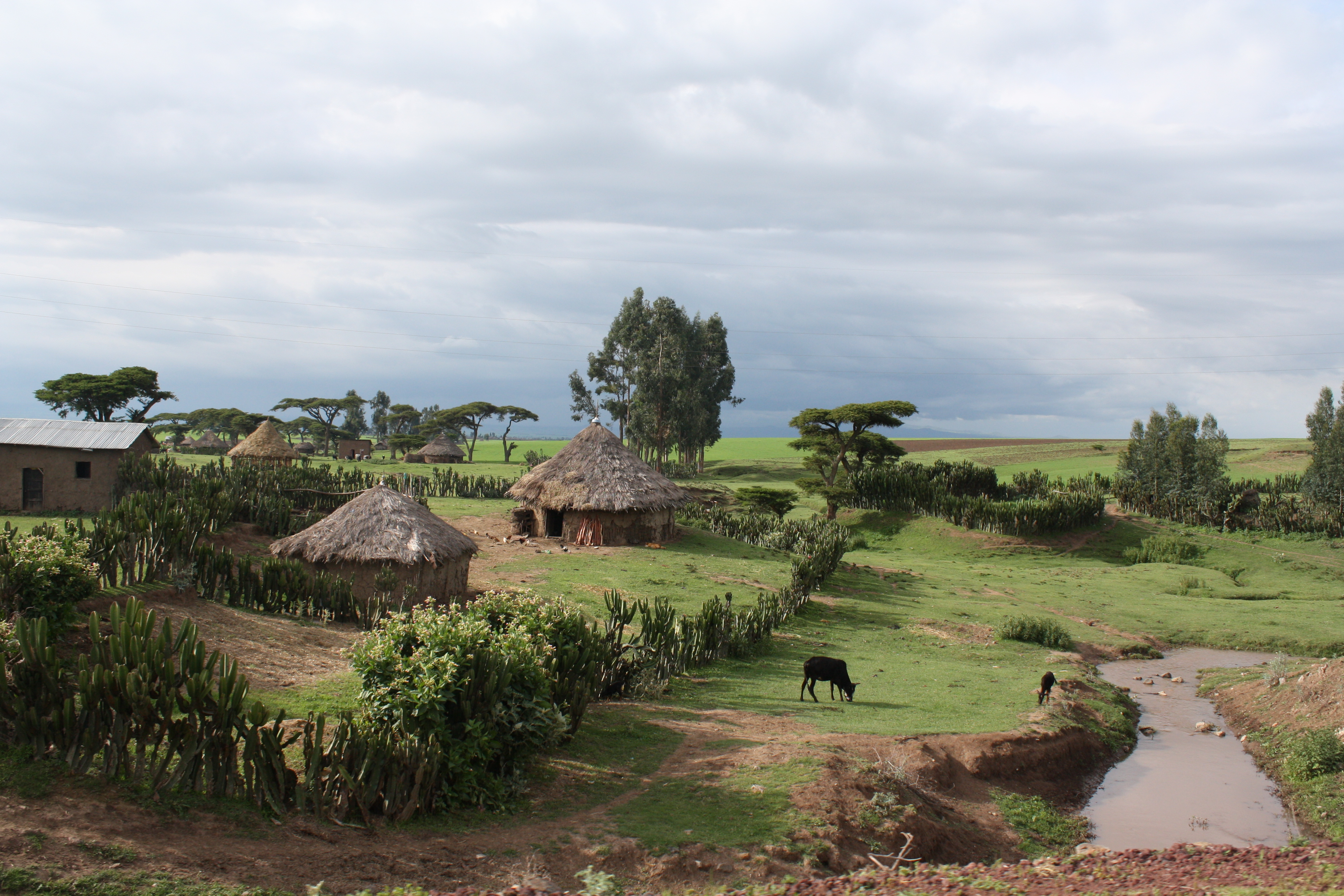
A similar dynamic has been in play over the last few years in our approach to ministry in Ethiopia. When you start spending time with a people who live in huts made of grass, heated by dung or eucalyptus bark, farming with ancient (literally) tools, its hard not to reflect on your thoroughly modern and wonder, “Dude, what is wrong with these people?” Which everyone knows is the first step to effectively empowering others to become all God intended them to be. In all seriousness though, from early on, I’ve wondered, how can we help our friends without acting like we know what’s best, even though in many cases we probably do! I’ve come to see that if we tell them what they need, what they need to do, and how they need to do it, their creative potential is suppressed and they are hindered from embracing God’s purpose for their existence. This is not easy. This philosophy requires patience, a willingness to watch people make mistakes happen and communities develop slowly.

IMG_9981
Ancient civilization or potential hotbed for creativity and innovation?

We’ve invested nearly $75,000 in Savings Groups over the last three years. Stories of transformation through these groups abound, but the overall impact is small. To this day, many members do not have access to seemingly basic necessities like clean water, which may have been different if we had used those funds differently. But the SG program, much like our church planting and micro-finance strategy, focuses on releasing the imagination, ideas, and existing resources possessed by our Arsi Oromo friends.   Back to the World Cup. I think the lesson of becoming a sucker for soccer is one of servanthood. When we are called to serve another, whether its a child, or the poor, orphan, and widow, we must shed our likes and dislikes, our preferences and perceived wisdom. We have to ask, how can I help this person or these people discover who God created them to be. In that process, we can begin to love what they love and genuinely celebrate this discovery with them. We can go from being a surfer guy to a soccer dad.

As Cool as the Man in Black

We’re always trying to be a little cool. My attempt at cool is a mini-fascination with Johnny Cash. But I have a confession of sacrilege to make, which will probably disqualify me among any moderately authentic fan of the Man in Black: Walk the Line was my first real exposure to Johnny Cash and I don’t own any of his records.

IMG_6001I’m not sure how much I actually like Cash’s music. But I like his story, and the stories he tells. And he’s cool. Black suits and slick hair; a rebel whose most famous recording was in a prison, where he’s heard heckling the wardens in front of the inmates.  He played for presidents and made a record with U2. His cool is so universal that Sara found this shirt for me at The Gap. (Yeah, the one that sells overpriced jeans.)
Cash is the perfect icon for a grown-up evangelical Christian like me. Gospel songs, songs celebrating family and America, social songs, love songs, rock, country.  A bold Christian who seemed to believe in Truth, Jesus, the Bible, Justice, Judgment, and Hell. A man whose artistry propelled him to the top of the cultural mountain but whose faith was never an asterisk to his stardom. He spent time in jail, sang for presidents, lived a life of debauchery before turning to Christ, and sang with U2 our other favorite ‘Christian’ cultural kings.

Liking Johnny Cash can add a certain cachet to an otherwise uncool life. I may have never lived an ‘edgy’ life. But Johnny did. To the world, he’s a fighter, unconstrained by any law but his own. To the Christian, he did all the rebelling for us. We can take our milquetoast youth and say, “See! Look what God did for him.”

But underneath the cool is a fascinating story of an imperfect saint. In autobiographical accounts and stories told following his death in 2003, it was clear Mr. Cash was never clean for very long. Despite singing “I’ve got Jesus in my Soul” he struggled with addiction to amphetamines for his entire life. I’ve taken so much from the Cash transformation and regression story – it is what the Kingdom of God is like around the world. We are all haunted by the demons within and without that conspire to drag us back to rebellion and misery with promises of satisfaction. Some are more blatant and public than others, but all of them restrain the final perfection Jesus promises in Glory.

This present, but not yet salvation is a helpful lens to view the work we’re doing in Ethiopia (or anywhere – home, work, school). Each positive step is shadowed by mind-bending steps backward. As one young woman is faithfully building a small business and repaying the small loan that helped her start it, another shutters her coffee shop doors and can’t be reached to find out why. The multiple baptisms I witnessed in January demonstrating the efficacy of our church planting strategy has been met with some frustrating decisions by leaders in the last few months. Many similar stories could be told about our other development initiatives.

IMG_0142I look at these challenges and remember my cool-hero Johnny Cash and the arc of his entire life. A redeemed man finished his earthly journey still wrestling with the same chains that drove him to Christ. The end of the Discovering Light mission isn’t Nirvana. My expectation isn’t for God’s good kingdom to eradicate all the bad that exists in Arsi Oromo communities. (For the record, I could probably write about all the good that existed in Johnny Cash before his conversion and how it’s similar to the good in Ethiopian villages that haven’t embraced Jesus.)

Knowing our earthly limitations, we seek a Cash-like transformation that sweeps entire villages and districts in Southern Ethiopia.