You are most likely carrying the virus that causes Mononucleosis. I bet you didn’t know that. If you’re like me, you thought it took making out with the wrong person sometime in the late high school years to get this dreaded illness. According to youthful legend, Mono was the called the “kissing disease” because of the ‘interaction’ associated with it, which made it about as embarrassing as it was painful. Anyone who tried to oppose the suspicious inquiries of “Who’d you get it from?” was met with a hearty “Yeah, right!”
Little did I know nearly all adults carry the Mono-inducing Epstein Barr Virus whether they’ve ever experienced the symptoms or not. And, they can be even be contagious without getting sick themselves. (Google ‘Mono’ and you’ll get all the details.) Not only that, but people of all ages, including children can contract the illness. We learned this the hard way last week when we took Roman to urgent care after 5 days with a fever and bulging lymph nodes. The doctor suspected Mono pretty quickly and our hopes for a quick antibiotic solution were dashed when he called to confirm a few hours after the visit. All of a sudden our summer days of planned activities changed and we began adapting to life with a homebound child for at least the next few weeks.

After a day or so of lying around, extended movie watching, iPad games, milkshakes, and donuts were little consolation for the little guy watching his brothers and sister head out to the beach and pool. We may have been the only family in America that sent several of their kids on a secret mission to see Finding Dory to save a sick child some disappointment. Bless his heart, he’s kept his chin up and is now improving daily, and mom and dad are grateful for the blessing of just a slightly more than minor illness, knowing others in our community who aren’t having it as easy as we are. Yet, four-plus weeks of limited physical activity to protect a compromised spleen seems like an eternity. Every person we’ve met who’s had the virus has given the same description, “It was horrible!” I haven’t asked any to elaborate on their experience but I definitely wonder what long-term impact these few weeks will have on Romey’s little mind and heart. What does the world look like through his eyes right now?
The mono experience is most certainly his first disappointing life event. As far as I know this is his inaugural encounter with natural circumstances beyond control affecting his daily life. Adults often tell of moments in childhood that shape their outlook. A family move, a lost friend, a teacher’s scolding; or positively, an award, a successful stage performance, an unexpected friendship. You might have seen how Pixar highlighted the role these “core memories” play in the delightful film Inside Out. (Yes, this is the second Pixar reference in a row.) Will Roman’s Mono summer shred a previously held belief in some worldly good? Or possibly give him a deep appreciation for the life he enjoys. If Inside Out was accurate, this summer will be monumental on a subconscious level, at the very least.
There is a complexity to how we look at children in our culture that I’ve never explored during my time working in Ethiopia. I’ve spent time with kids, asked them simple questions about their life and such. But not much further. I’m intrigued by how they process life’s events. Their normal is so intense. Watching mom and dad struggle daily to provide and ration provisions with many family members must be weighty. Statistics show child mortality has decreased considerably in Ethiopia over the last 20 years. Yet, children are still more likely than not to have at least one brother or sister or a neighbor’s child pass away at a young age. Illnesses we almost never have to face effect young ones regularly. Pneumonia is the leading cause of death in children under 5. Parents suffering from HIV/AIDS is common, albeit less than some other Sub-Saharan nations. Air pollution in the home is prevalent with cooking and heating on open stoves with coal or dung, leading to chronic respiratory problems. Girls Roman’s age typically begin helping carry water and collect firewood. That they learn hard work at an early age is an understatement. Boys are likely farming in the field with their fathers and older brothers by 6 or 7 laboring themselves or watching a monotonous routine produce barely enough for their family.
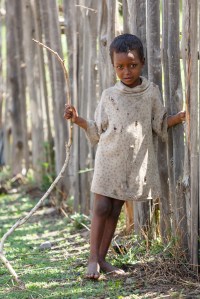 How do the precious children of Southeast Ethiopia see the world in light of these experiences? Roman has heard dozens of encouraging and uplifting responses to every realization of disappointment during his few weeks overcoming Mono. What messages does Yohannes hear when the family is done burying his little brother after losing his battle with dysentery? Roman will at least hear how unlikely he is to ever face something like this again which is statistically true. Yohannes may wonder, am I next?
Watching Roman these last few weeks has given me a window into how impactful childhood events can be, in particular, those of the natural variety. We experience so few moments out of our control that when something like Mono occurs, it’s assaulting. I’ve watched Roman rage and weep several times over the last few weeks in what could be a microcosm of what someone with a more serious illness like cancer goes through.
Overcoming a fatalistic mindset is one of the greatest challenges our community programs are working to overcome. It’s not hard to see why.
Our little friends in Ethiopia see an entire world that is out of their control. At least it seems that way to them. The kind of change that would make young Yohannes experience life more like Roman is not likely to come while he is young. A generation or two, maybe three are required to persuade a people they can have far more dominion over their life and livelihood than they do now. Overcoming a fatalistic mindset is one of the greatest challenges our community programs are working to overcome. It’s not hard to see why. When we meet families in villages, there’s a sense people feel we’re glad your here, but what can realistically be done to change my life? A legitimate question. Recognizing the disparity in average childhood here versus there helps explain why that perspective is so entrenched. It also explains why there is just as much desperation as there is dependence fueling hope in ‘hand out’ solutions to their poverty. According to facilitators, the first six to eight months of savings group formation are often spent helping the members save money as a discipline and combating disbelief long enough to demonstrate how the simple activity can make a significant difference.
A few days into Roman’s illness, he and Dane decided to make something of their afternoon (stuck at home) by setting up a lemonade stand in front of our house. I found myself uncomfortable, wanting to save the kids the disappointment of not making any money, but hesitant to quash their entrepreneurial spirit. Well, in a few hours they made $12 from a steady stream of customers stopping their cars to grab a snack and cold drink on a hot day. I was happy for them and even more thankful I kept my mouth shut while they were gathering supplies. The positive lessons they learned may be subconscious, just like any negative impact of Roman’s mono. Despite moderately challenging circumstances, the boys turned their ‘little’ into a lot. In a simple way, that is the essential message we have to share with our friends in Ethiopia. In the True economy, the little you possess isn’t a sentence but a seed of opportunity. Whether it’s the faith to begin a relationship with God himself or the small field that is ripe for exponential growth, the little you offer can become more than you ever imagined.
 Keep Your Eye on the Rhodes