Most of the time when I tell people about Discovering Light, they respond by saying something like, “That must be rewarding.” Others say, “You are doing some real good.” Both statements are true I’d say. Something else is true about our work. We’re not solving all the problems. In fact, while we’ve made a steady shift to addressing what we believe are core issues in rural Ethiopian villages and families, history shows there’s most likely a ceiling on the impact of our efforts. The best poverty and international development research shows things like rule of law, property rights, and economic freedom are essential to achieving and sustaining prosperity. We’re definitely making a significant impact, not just on individuals, but on whole communities. And initiatives like savings groups and our discipleship strategy are capable of producing movements across entire regions. Some signs of this are already evident.

But we’re not fooling ourselves. Our potential is limited.
Discovering Light took a long look in the mirror a few years back and determined how to use our resources for the most good in Southeast Ethiopia. That included less emphasis on clean water and more on addressing cultural obstacles to establishing strong families and communities. We decided this was the best we could do, considering all the facts on the ground, if you will. Whatever impact we were going to have on clean water was going to be mostly indirect. So there’s smaller problems like water for a village, and bigger problems like rule of law for a nation that we aren’t going to solve. While some discussion around how to deal with these challenges is worthwhile, there really isn’t a question of whether both are worthy causes.
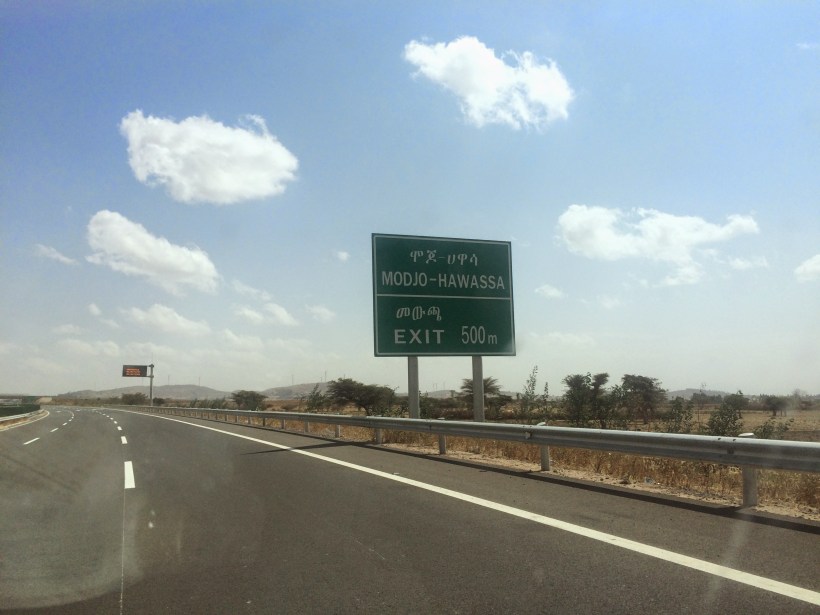
The more I learn about Ethiopian national life and politics, and the history of successfully ‘developed’ countries like Japan, South Korea, and Israel, to name a few, the more I wrestle with our distance from the ‘macro’ issues. If our impact has a ceiling, should we not be doing something else that can accomplish more? Part of my fear is that all our great work could be swept away in one crisis like the one brewing between rural Ethiopians and the government in Addis Ababa. At the same time, when I ask the question, “what can we do” to address ethnic conflict or establish property rights, I find few answers. We just can’t solve all the problems.
In our day of global consciousness, unrelenting technological advances, and ‘everybody can start a startup’ mentality, a false sense of power is easy to embrace. “We are the change!” Not so fast. I may theoretically provide access to clean water for one family with a $50 donation or teach a young women the skill of saving for $25. But a healthy awareness of the whole picture is essential.
As usual, these reflections can apply to our role in foster care. So far, we’ve only impacted the four children in our care and their families. There’s been indirect impact on other individuals, but we’ve had no effect on the overly bureaucratic and overworked state and county social services. We aren’t involved in improving the adoption process or making addiction recovery more holistic. Our family has just been taking care of the babies and encouraging their parents. And just recently, we decided to ask our agency to find another home for our current placement. After several months caring for a little girl, we realized our family life was suffering in some unhealthy ways and we needed to reassess our role in foster care going forward. Even for this one, our capacity is limited.
Some people will hopefully one day lead a healthy political and economic transformation in Ethiopia. I doubt Discovering Light will play a role. Foster care in California may improve dramatically someday. But our names most likely won’t be in that story. We have a role to play, a calling to fulfill. We can give it everything we have using all the resources available while humbly acknowledging we can’t solve all the problems.
 Keep Your Eye on the Rhodes